Engineered Landscape Structures for Stability, Drainage, and Functional Outdoor Design
Site Evaluation and Soil Analysis for Structural Design
Every retaining wall project begins with a comprehensive evaluation of your site conditions, including soil type, slope, and load requirements. We analyze how the terrain behaves under pressure and identify areas where support is needed. This phase ensures that the wall design accounts for lateral forces, water movement, and environmental factors. Proper evaluation allows us to create a retaining system that performs reliably and maintains long-term structural integrity under varying conditions.
Custom Retaining Wall Layout and Functional Planning
We design retaining walls to align with your property’s layout and intended use of space. This includes defining boundaries, supporting elevation changes, and creating usable zones within your landscape. Each wall is strategically positioned to maximize space efficiency while maintaining a clean and organized design. Functional planning ensures that the retaining wall not only supports the terrain but also enhances the usability of your outdoor environment.
Structural Engineering and Load-Bearing Design
Retaining walls must be engineered to withstand soil pressure and environmental stress. We design each wall with proper reinforcement, base preparation, and structural support to ensure long-term stability. Load-bearing calculations are integrated into the design to prevent shifting, cracking, or failure. This engineering-focused approach ensures that your retaining wall performs effectively under continuous pressure and maintains its structure over time.
Drainage Integration and Water Management Systems
Effective drainage is essential for the performance of retaining walls. We incorporate drainage systems such as gravel backfill, weep holes, and drainage pipes to manage water flow behind the wall. These systems prevent water buildup and reduce pressure on the structure. Proper drainage design ensures that the retaining wall remains stable and minimizes the risk of erosion or structural damage.
What’s Included in Retaining Wall Services
- Detailed site evaluation and soil condition analysis
- Custom retaining wall layout and structural planning
- Load-bearing and reinforcement design
- Drainage system integration and water management
- Material selection and surface coordination
- Professional installation with precise construction methods
Material Selection and Performance-Based Design
We select materials based on strength, durability, and compatibility with your landscape. Options may include concrete blocks, natural stone, or reinforced systems designed for heavy load conditions. Each material is evaluated for performance under Houston’s climate, ensuring resistance to moisture, heat, and environmental wear. This ensures that the retaining wall maintains both structural integrity and visual consistency over time.
Structural Wall or Decorative Edge? That Changes the Scope
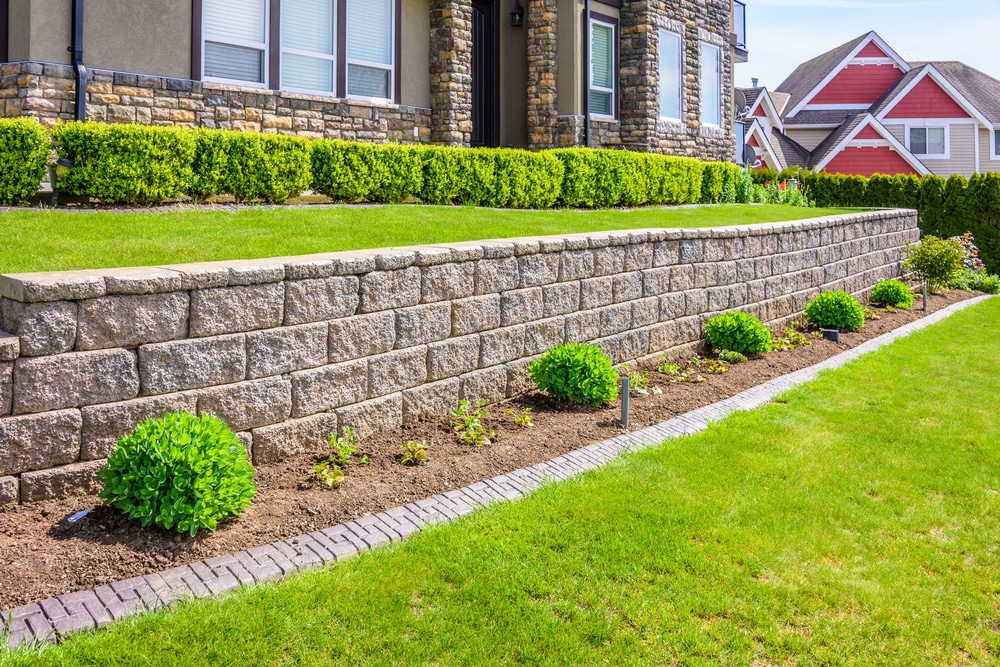
A retaining wall that holds back a meaningful grade change is a structural element carrying real soil load, not a decorative one — depending on height and the load behind it, that can mean an engineered design rather than a standard build, the same category of structural review MAV already applies to load-bearing work elsewhere in a project. A short garden-bed edge that is not holding back a grade change is a different, much simpler scope. Drainage behind the wall connects directly to the grading decisions covered on hardscape design.
Base Preparation and Foundation Construction
A stable foundation is critical for the longevity of a retaining wall. We prepare the base by excavating to the proper depth, compacting soil, and installing a reinforced foundation layer. This process ensures that the wall remains level and resistant to movement. Proper base construction prevents settling and provides the structural support needed for long-term performance.
Reinforcement Techniques and Structural Stability
We incorporate reinforcement methods such as geogrid systems, anchoring, and layered construction to enhance the strength of retaining walls. These techniques distribute load pressure and improve stability across the entire structure. Reinforcement ensures that the wall can withstand heavy soil loads and environmental conditions without compromising performance.
Multi-Level Landscape Design and Tiered Walls
Retaining walls are often used to create multi-level landscapes, allowing for efficient use of sloped terrain. We design tiered wall systems that divide elevation into manageable sections, improving both functionality and visual organization. This approach creates usable outdoor areas while maintaining structural integrity across different levels of the property.
Erosion Control and Soil Retention Solutions
Retaining walls play a critical role in preventing soil erosion and maintaining land stability. We design walls to hold soil in place and protect your landscape from shifting due to rainfall or environmental factors. Erosion control measures are integrated into the design to ensure long-term effectiveness and maintain the condition of your outdoor space.
Integration with Hardscape and Landscape Features
We design retaining walls to integrate seamlessly with other landscape elements such as patios, walkways, and planting areas. This ensures a cohesive design where all components work together to enhance functionality. Proper integration improves both usability and the overall appearance of your outdoor environment.
Climate Adaptation and Long-Term Durability
Retaining walls are built to withstand Houston’s climate, including heavy rainfall, humidity, and temperature fluctuations. We use materials and construction methods that resist environmental stress and maintain performance over time. This ensures that your retaining wall remains stable and functional throughout changing conditions.
Space Optimization and Property Enhancement
By managing elevation changes, retaining walls create additional usable space within your property. We design these systems to maximize land use, allowing for expanded outdoor areas and improved layout efficiency. This enhances both functionality and property value while maintaining a structured landscape design.
Installation Process and Construction Precision
Our retaining wall installation process follows precise construction standards to ensure accuracy and durability. Each phase, from excavation to final placement, is carefully managed to maintain alignment and structural integrity. This ensures that the finished wall meets design specifications and performs reliably over time.
Long-Term Performance and Structural Investment
A professionally designed retaining wall provides long-term benefits by stabilizing your landscape and improving functionality. It serves as a structural investment that enhances property usability while protecting against soil movement and erosion. With proper design and construction, it delivers lasting value.