
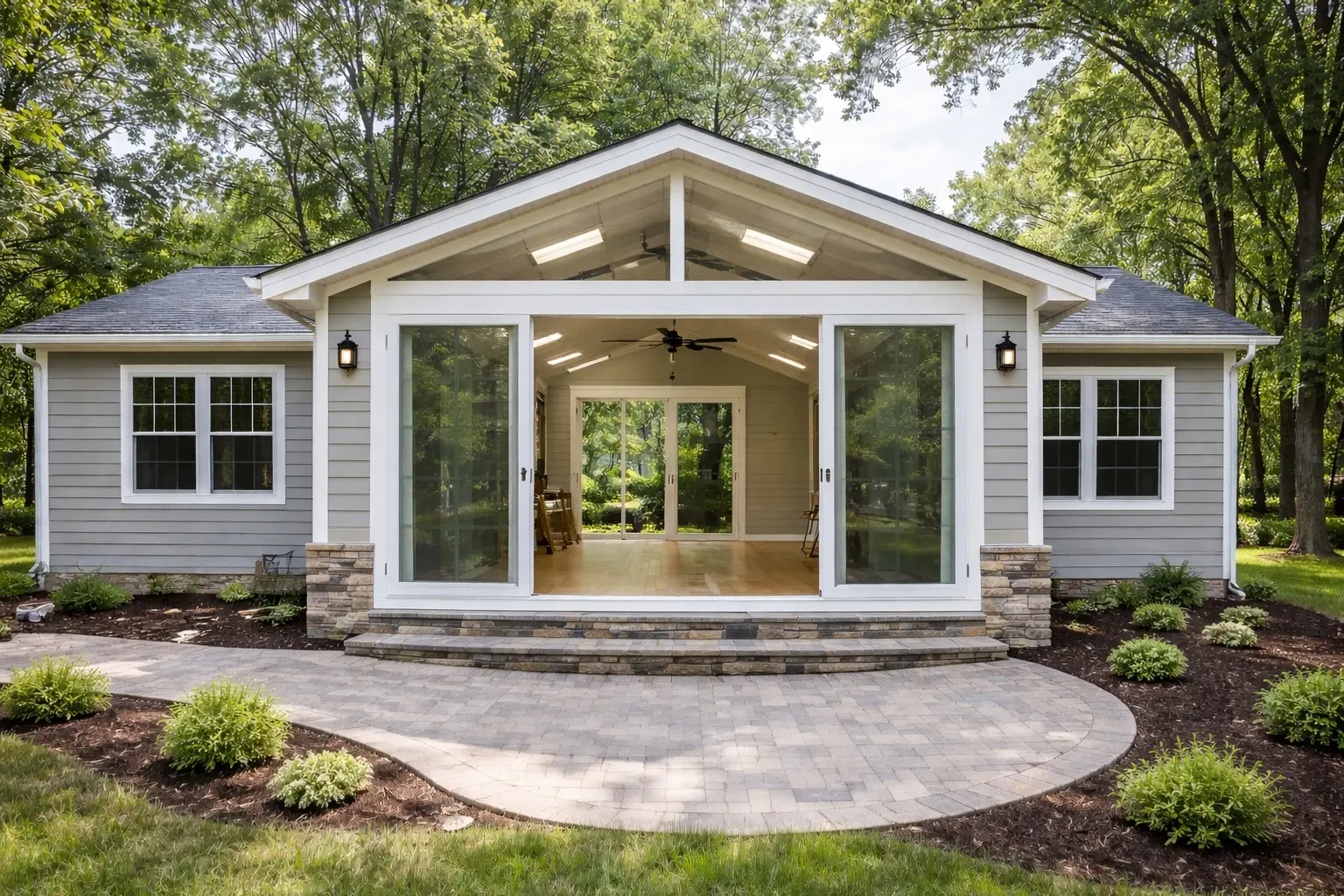
In much of the Houston area — Cypress, Spring, Katy-area and Fort Bend master-planned communities, Lake Conroe — there is no city building department, but there are still approvals. County floodplain rules, a nearby city’s code in its ETJ, a county’s Chapter 233 rules if it has opted in, and your HOA’s architectural review can all apply to one addition.
Request a Free EstimateCall (832) 532-6829Illustration. The layers that can apply to an addition outside city limits. Which ones apply depends on the exact lot.
Sources: Texas Local Government Code §§233.151–.157; Harris County Office of the County Engineer; Texas Property Code §209.00505. Checked Oct. 25, 2026. General information, not legal advice.
Who approves an addition when there’s no city?
Start by finding out whether your lot is inside a city’s limits — that single fact decides whether a city building department issues your permit. Many Houston-area subdivisions with a “Houston,” “Spring,” “Cypress” or “Katy” mailing address are not inside any city. Your appraisal district account lists the taxing units for your property: a city among them means you are inside that city; a municipal utility district (MUD) is a utility provider, not a city.
If you are inside the City of Houston, MAV’s Houston Permitting Center vs. Harris County guide and home additions planning & permits guide cover that path. This page is about everything else.
- 1
MAV project photo
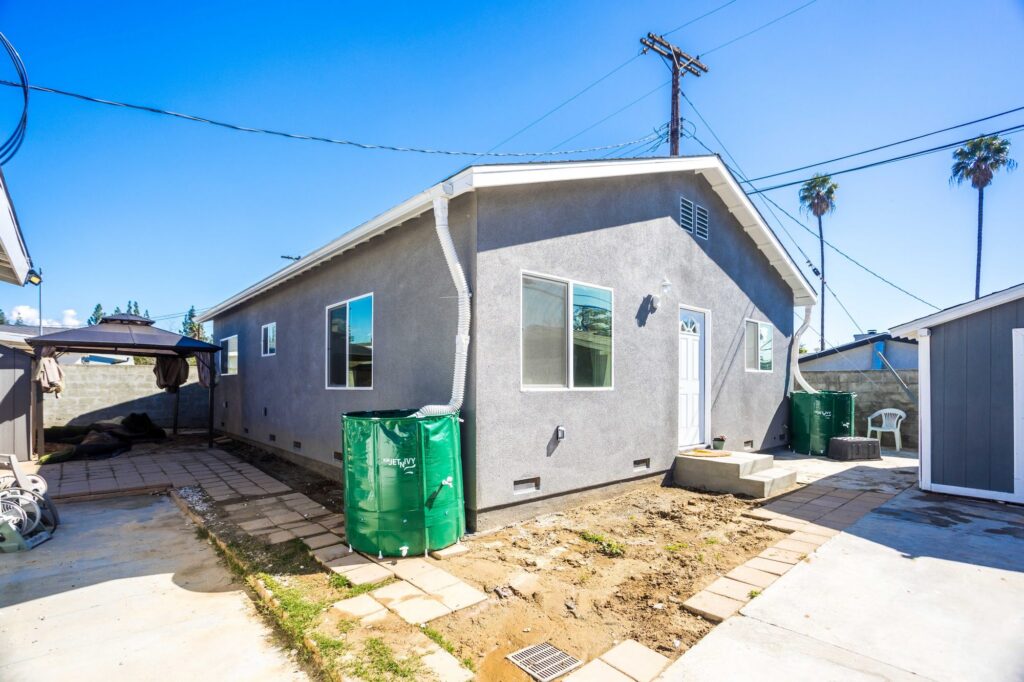
Overhead utility lines near a new structure — check recorded easements on the survey before design. - 2
MAV project photo
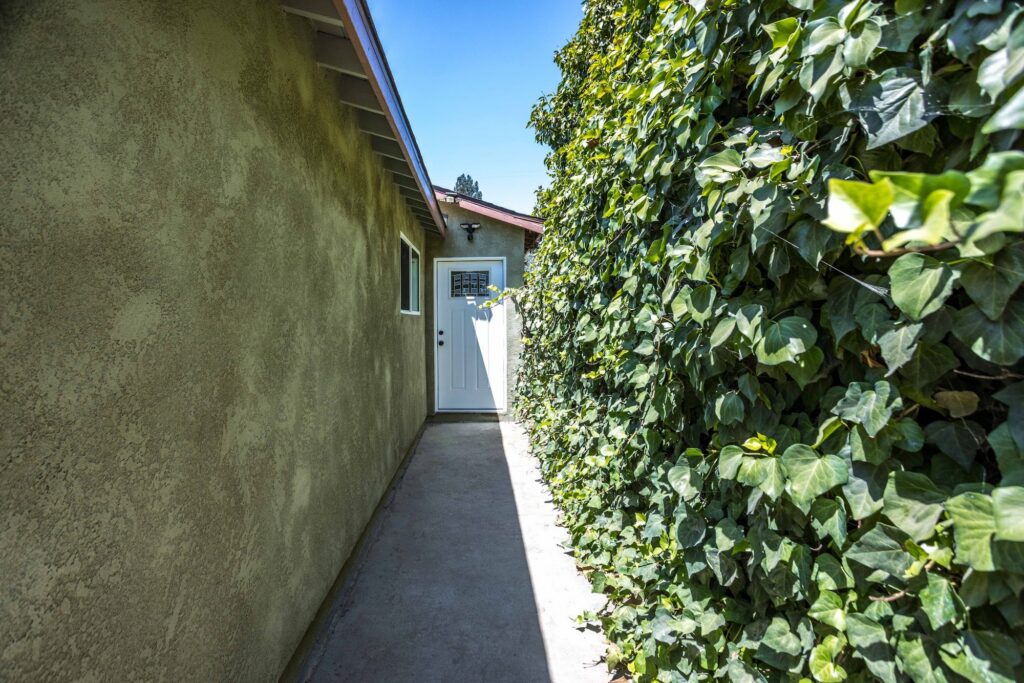
A narrow side yard: side setbacks and access paths are checked against the survey. - 3
MAV project photo
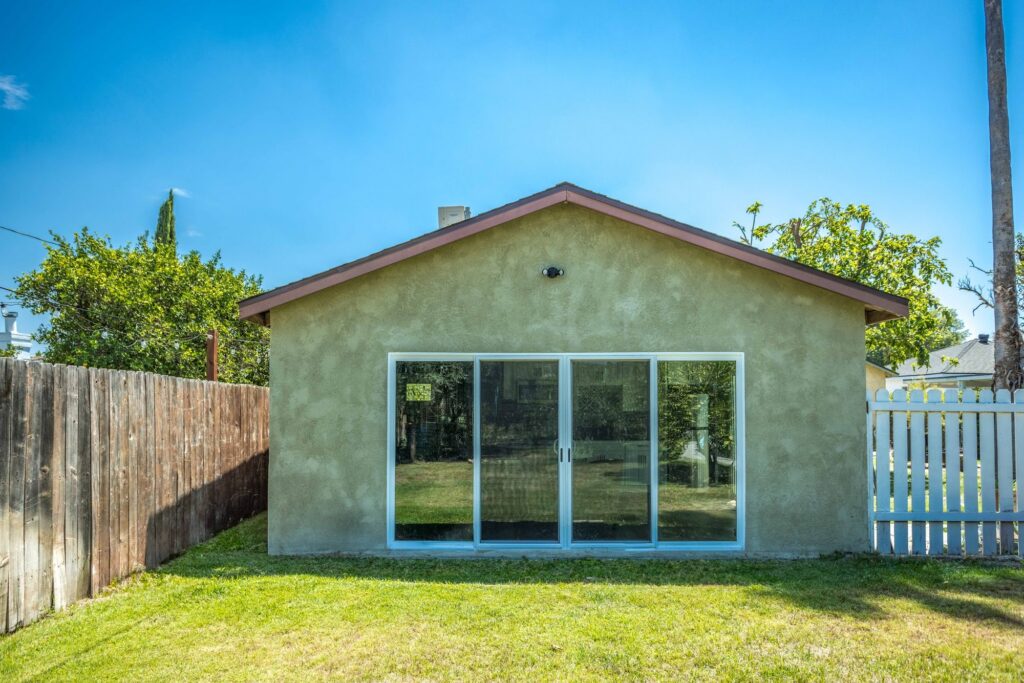
An addition set behind existing fences — fence and setback lines shape the buildable area.
Layer 1: county floodplain and development rules
Flood zone, elevation certificates and freeboard for additions are covered in MAV’s flood elevation guide.
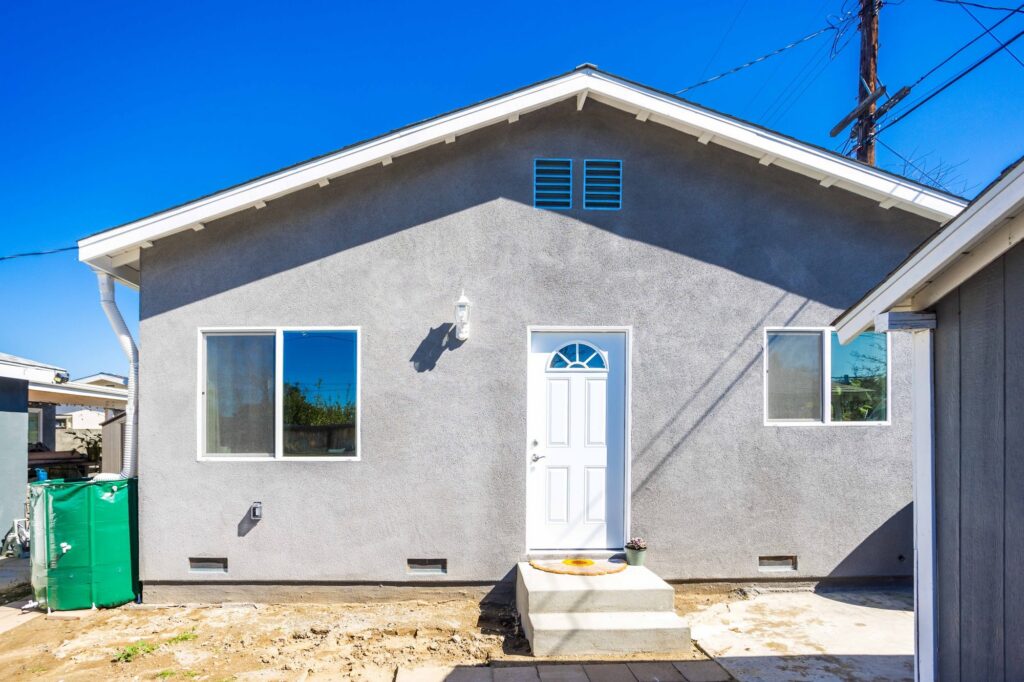
A new gable-roofed structure set in a back yard — setbacks come from the plat and deed restrictions.
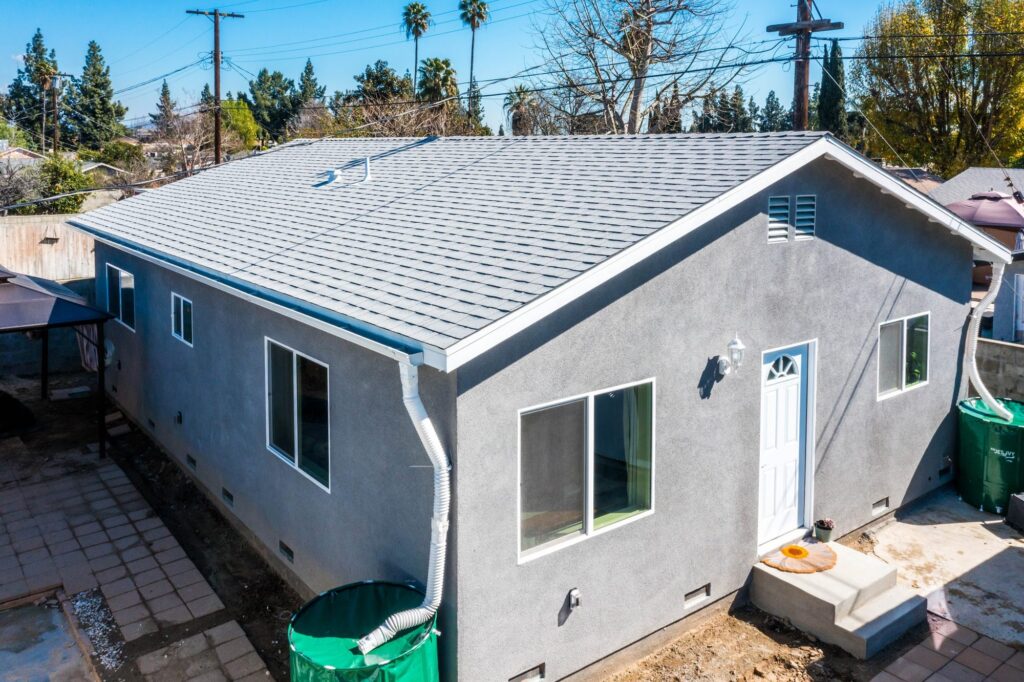
From above: roof, setbacks and drainage paths the architectural reviewer will look at.
Layer 2: a city’s ETJ and the county’s Chapter 233 rules
Texas law gives counties a limited, opt-in building-code role for homes in unincorporated areas — and lets a city’s code control in its extraterritorial jurisdiction.
| Example (existing home 2,000 sq ft) | Addition | Increase | “New residential construction” under §233.151(a)(2)? |
|---|---|---|---|
| 2,000 sq ft home | 400 sq ft | 20% | No — 50% or less (by square footage) |
| 2,000 sq ft home | 1,000 sq ft | 50% | No — 50% or less (by square footage) |
| 2,000 sq ft home | 1,100 sq ft | 55% | Yes — more than 50% |
| Any size | Increases the building’s value by more than 50% | — | Yes — the test is square footage OR value |
Worked examples of the statutory test (“more than 50 percent”). Applies only in a county that has adopted Subchapter F by resolution or order; whether yours has is a question for the county.
Layer 3: the MUD — services, not approvals
Most unincorporated master-planned communities around Houston are served by municipal utility districts that provide water, sewer and drainage. A MUD is not a building department and not your HOA. An addition that adds a bathroom or changes drainage may involve the district’s utility or drainage rules, but plan approval for the addition itself comes from the other layers on this page.
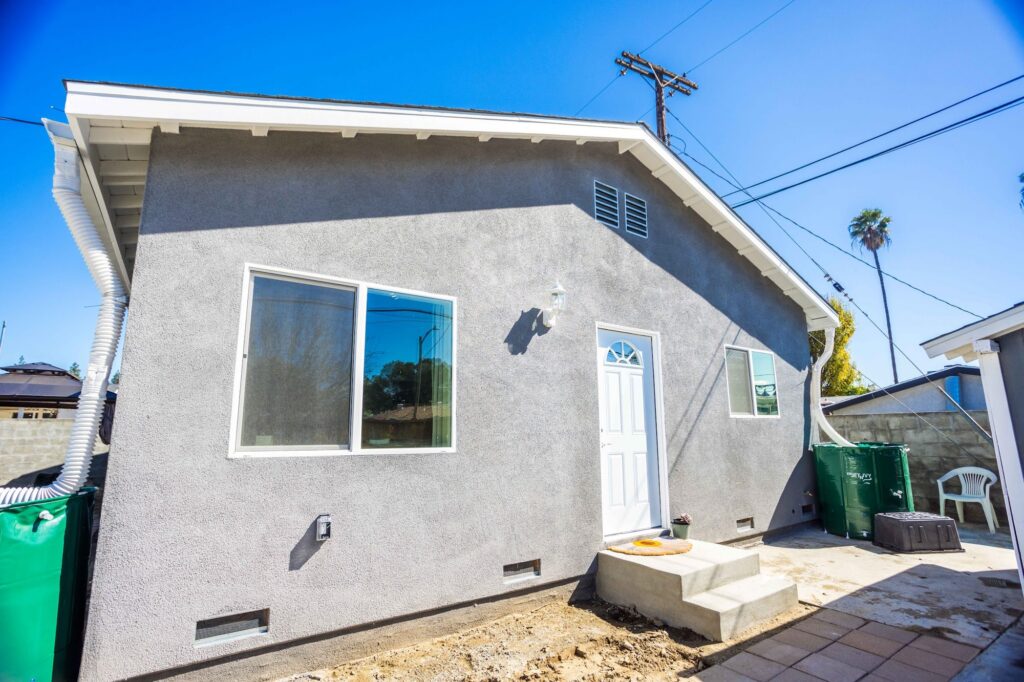
Gutters routed to rain barrels: drainage changes are one of the things that can involve your MUD or county.
Downspouts, rain barrels and new paving change how water leaves a lot. Drainage rules can involve your county or your utility district even when no building permit office reviews the addition itself.
Layer 4: HOA and community architectural review
In deed-restricted communities, private architectural approval is usually the most detailed review your addition gets — and it is separate from any government permit.
| Community (Appendix examples) | Government layer (verified) | Architectural review (verified) |
|---|---|---|
| The Woodlands (e.g., Village of Carlton Woods; Village of Creekside Park) | Unincorporated Montgomery County (Creekside Park: unincorporated Harris County) | Township Residential Design Review Committee — prior written approval required; “room additions” listed (Township) |
| Magnolia Creek (League City) | City of League City — a recognized PUD (City page) | Magnolia Creek Homeowners’ Association, Inc. (state HOA management-certificate filing) |
| Grand Harbor (Lake Conroe) | Montgomery County, per the POA; city-limits status not confirmed | Grand Harbor POA Architectural Control Committee |
| Saddle Creek Forest | County not confirmed (ZIP 77484 spans counties) | Saddle Creek Forest Property Owners Association |
Examples drawn from MAV’s verified location research (official city, Township and association sources, checked Oct. 25, 2026). Rules change; confirm with the body named before submitting.
+View as table
| Item | Value (days) |
|---|---|
| Request HOA hearing (§209.00505(d)) | 30 |
| Board holds hearing (§209.00505(e)) | 30 |
| Notice before hearing (§209.00505(e)) | 10 |
| Max. postponement (§209.00505(g)) | 10 |
| Report final inspection (§233.154(c)) | 10 |
Source: Texas Property Code §209.00505 (statute text) — POAs with more than 40 lots; Texas Local Government Code §233.154 (statute text) — opt-in counties only. Checked Oct. 25, 2026.
Two more Property Code points: courts presume an association’s discretionary architectural decision is reasonable unless the owner proves it arbitrary, capricious or discriminatory, and a court may assess civil damages of up to $200 per day for violating a restrictive covenant (§202.004). Getting written approval before construction is far cheaper than arguing afterward. MAV’s HOA architectural review guide walks through a submission.
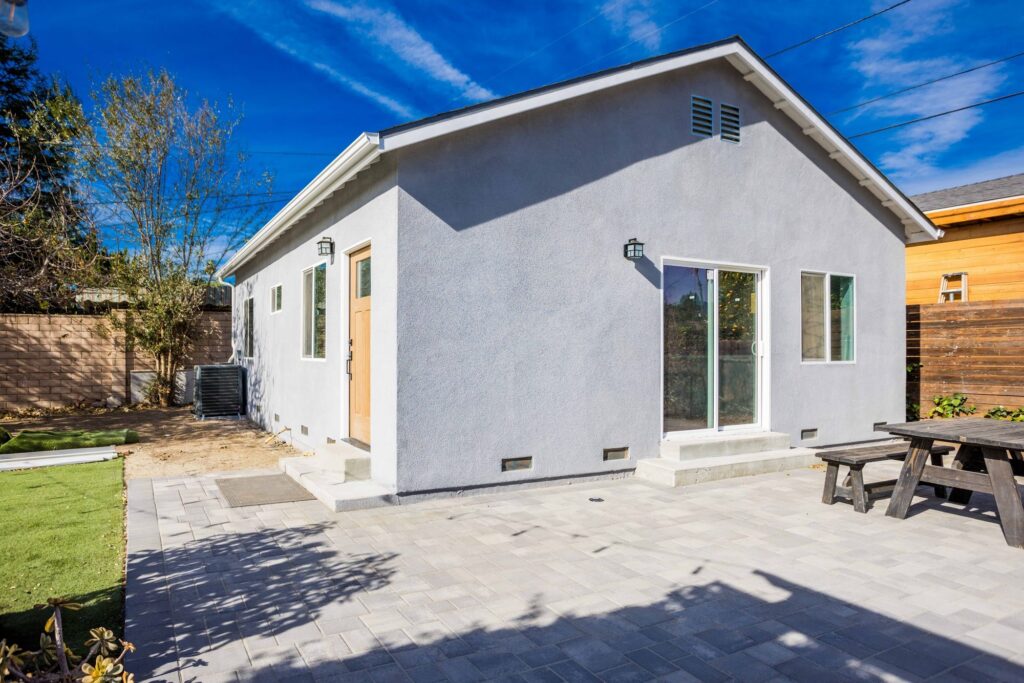
A paver patio and new door — hardscape and grading are part of an approval package.
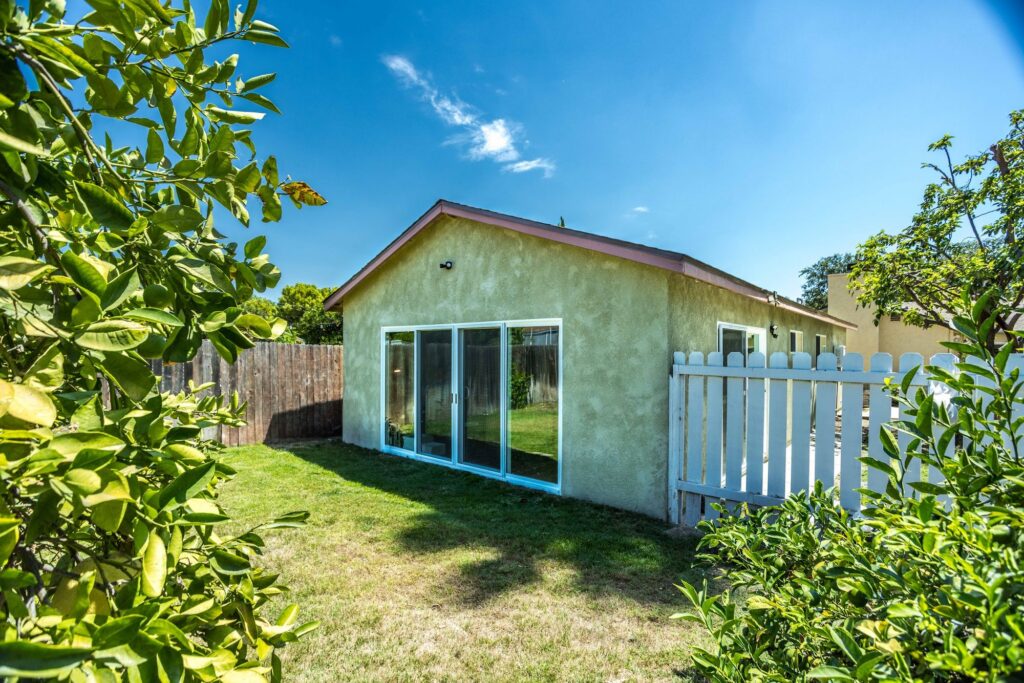
Fences, trees and the yard around an addition — what the reviewer and the survey both look at.
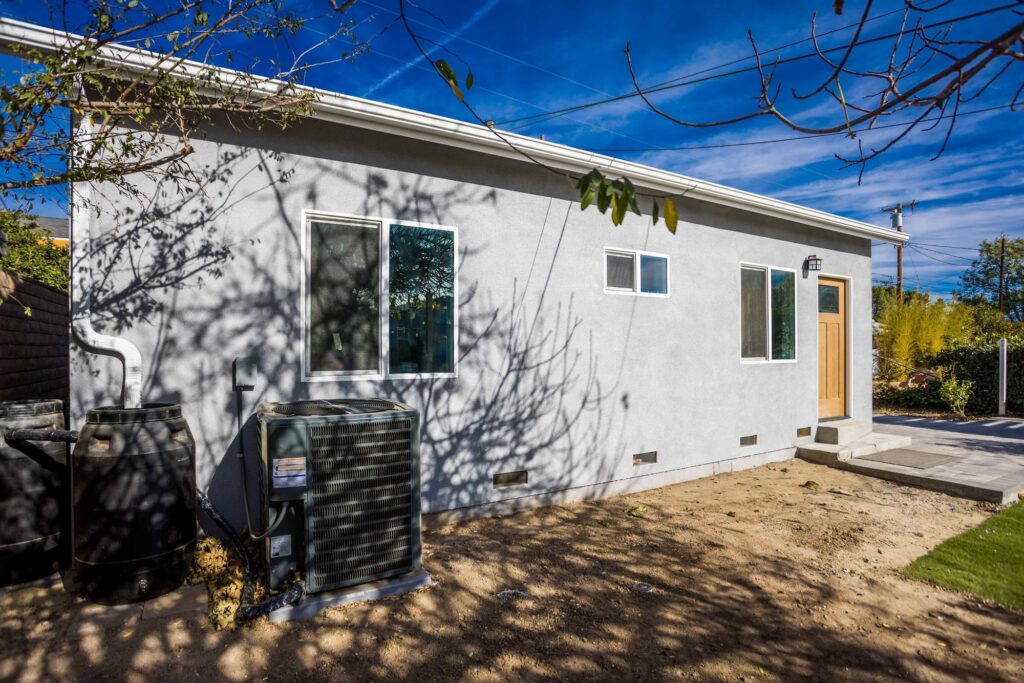
Mechanical equipment in a side yard — placement rules often come from deed restrictions.
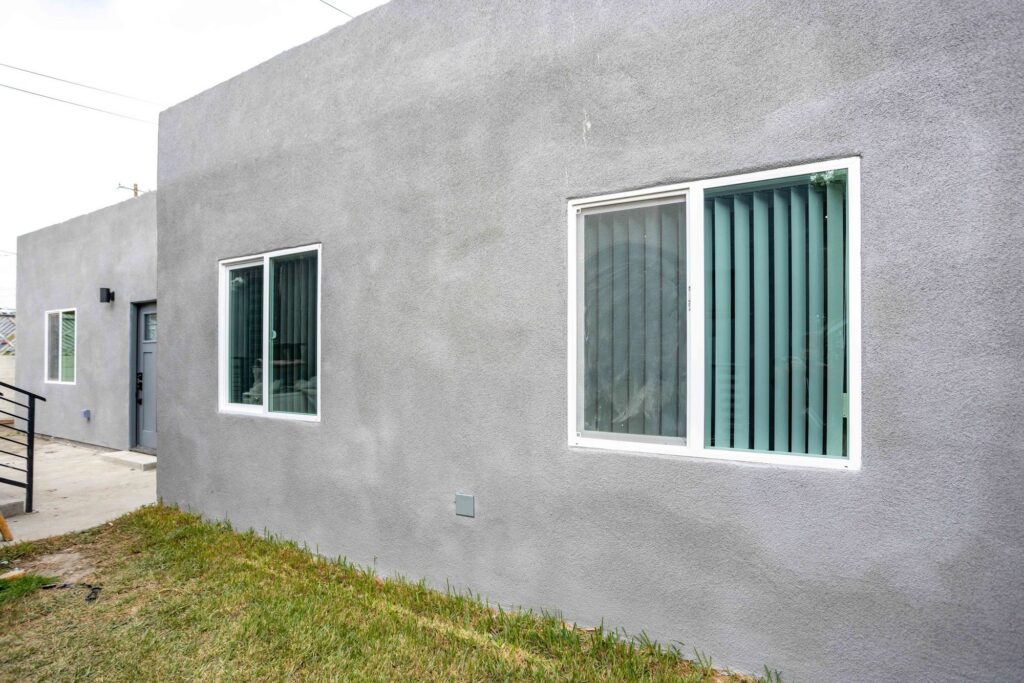
New windows on a side wall — window placement relative to neighbours can be an HOA review item.
Pick the closest description:
Every approval layer on this page is settled before work starts — the cheapest time to change a plan is before the first wall comes down.
What the video shows: A 31-second MAV Design & Build reel on planning before demolition — layout studies, understanding the scope, and work starting only once the plan is clear. Burned-in captions; scenes are labelled in the video as supplied project footage and concept diagrams.
Approval steps for an addition outside city limits
- 1IdentifyConfirm jurisdictionAppraisal district taxing units, the county floodplain map, and whether a nearby city has adopted its code in its ETJ.
- 2SurveyGet the lot factsA current survey showing building lines, easements and flood zone, plus your recorded deed restrictions.
- 3DesignDesign to the strictest layerSetbacks and heights from the deed restrictions, elevation from the flood rules, and the community’s style rules — reviewed in 3D before submitting.
- 4ApproveArchitectural review, then permitsSubmit to the HOA or Township reviewer and to the county or city office in the order each requires.
- 5InspectInspections and recordsCity inspections, or the third-party inspections a Chapter 233 county requires — and keep the reports with your final paperwork.
Tick each one off as your contractor answers it.
A planning checklist; not a determination for your property.
MAV’s verified review set does not yet include a room-addition project. These are verified Google reviews from MAV clients across remodeling and new-space projects.
“They were easy to communicate with, showed up on time, and made sure everything was done properly.”
“MAV Design & Build did an excellent job with our remodeling project. The team was professional, responsive, and paid close attention to the details.”
“Their attention to detail really stood out, and the finished work exceeded our expectations.”
“They were honest about pricing, communicated well, and delivered exactly what they promised.”
About MAV Design & Build
Frequently asked questions
Do I need a permit for a home addition outside Houston city limits?+
What is Chapter 233 and does it apply to my addition?+
Who can do the inspections under Chapter 233?+
Does my MUD approve my addition?+
Do I need HOA approval for a room addition?+
What if the HOA denies my addition?+
How close can an addition be to my property line or an easement?+
Can I build an addition in a flood zone?+
Offer shown in the video: a $299 3D Design Package credited back.
Terms, eligibility and how long the offer runs are confirmed by MAV in writing before you sign — ask when you request your estimate. What the video shows: A 51-second MAV Design & Build promotional video on settling layout and exterior design in 3D before construction — the drawings HOA reviewers and permit offices ask to see.
Ask About This OfferCall (832) 532-6829Related room-addition planning guides
Not sure who approves your addition?
Send MAV your address and what you want to build. We’ll identify the approval layers for your lot — city or county, flood zone, HOA — and give you a free estimate.
Request a Free EstimateCall (832) 532-6829Related MAV pages: Room Additions, Room additions by city, home additions planning & permits, Houston Permitting Center vs. Harris County, HOA architectural review, deed restrictions & lot checks, flood elevation for additions and building a room over a garage or patio.
- Texas Local Government Code §233.151 — definitions (“new residential construction”, additions over 50%)
- Texas Local Government Code §233.153 — building code standards; ETJ; no prior approval; no fee
- Texas Local Government Code §233.154 — inspection and notice requirements
- Harris County Office of the County Engineer — Floodplain Management
- Fort Bend County — Permits (unincorporated areas)
- Montgomery County — Floodplain Administration
- The Woodlands Township — Home Modifications (Residential Design Review Committee)
- Texas Property Code §209.00505 — architectural review authority
- Texas Property Code §202.004 — enforcement of restrictive covenants
- City of League City — Magnolia Creek
Which counties have adopted LGC Chapter 233 Subchapter F was not verified, so it is stated conditionally. Brazoria and Galveston county pages could not be reached for this guide. Fort Bend and Montgomery permit details beyond their landing pages were not verified. Community examples are limited to entries with official sources. Checked October 25, 2026. Not legal advice.
I'm extremely satisfied with my kitchen renovation. The entire process was handled with professionalism and precision. The crew was respectful, efficient, and always made sure I was informed every step of the way. The final result — a beautiful, well-designed kitchen with top-quality finishes and excellent craftsmanship.
Love their work, the kitchen turned out amazing and exceeded our expectations. Completed in much shorter time than I thought it would. Can't recommend them enough!!
Great experience working with this company! They remodeled my kitchen and did an amazing job. The team was professional, easy to work with, and always on time. Everything went smoothly, and they paid attention to the small details.