
Houston’s summer highs average 94–95°F and the area gets roughly 52 inches of rain a year (NOAA/NWS, 1991–2020 normals) — real numbers that decide which decking material actually holds up. Here is what the manufacturers’ own warranty pages, the AWPA’s treated-wood standard, and MAV’s own published cost ranges say, with nothing invented.
Book a Deck ConsultationCall (832) 532-6829
Sources: NOAA/National Weather Service, Houston IAH Climate Normals; MAV Design & Build, Deck Construction. Checked Sept. 25, 2026.
Why Houston’s climate is hard on a deck
Heat, humidity and rain do different damage to different materials. Wood boards move with moisture and need a protective finish to slow it; composite and PVC boards are engineered to resist moisture but can still run hot in direct sun; and ground-contact wood needs a higher grade of preservative treatment than deck boards do. There is no single “best” material — there is a best material for what you actually prioritize.
Pick the option closest to your situation:
Deck material comparison for Houston
Sourced properties only — no invented per-square-foot costs or lifespans. MAV has never published per-material pricing; see the cost section below for its actual published ranges.
- 1Treatment standardAWPA Use Categories UC3B / UC4AThe AWPA’s Use Category System sets what a treated board must resist: UC3B covers “exterior construction, above ground, uncoated” — decking, railings, joists and beams. UC4A covers ground-contact and structurally critical members — deck posts and footings — which need deeper preservative retention. How large those footings actually need to be also depends on the soil underneath — see MAV’s guide to deck footing sizing on Houston’s expansive clay soil.
- 2MaintenanceNeeds a protective finishOpen wood grain moves with humidity, which is what drives cupping and warping over time. Periodic sealing or staining slows it; skipping it does not.
- 3Where MAV uses itFraming, almost alwaysPressure-treated lumber is the standard choice for deck framing (joists, beams, posts) regardless of what surface material sits on top — see MAV’s wood deck construction page.
- 1Natural durabilityMore decay-resistant than construction-grade pineCedar heartwood contains natural extractives that resist decay better than untreated softwood, which is why it is a common natural-wood decking choice in humid climates — though it is not immune to moisture damage.
- 2MaintenanceStill needs a finishLeft unsealed, cedar weathers to grey and loses the properties of its finish over time; a maintained sealing schedule keeps color and protection.
- 3Feel underfootRuns cooler than dark composite in full sunLighter, lower-density wood surfaces generally stay cooler in direct sun than dark synthetic boards — see the heat illustration below.
- 1WarrantyManufacturer warranties in the 25–50-year rangeTrex backs its decking and railing with “limited residential warranties ranging from 25 to 50 years” depending on product line. TimberTech’s composite lines (Reserve, Prime, Terrain) carry a 25- to 30-year product warranty and a matching fade & stain warranty.
- 2MaintenanceNo sealing or stainingTrex states staining or painting its decking “is not recommended and may void the limited residential fade and stain warranty” — the color and protective shell are engineered in at the factory.
- 3Where MAV uses itMost Houston backyard and pool decksSee MAV’s composite deck construction page for examples of Trex and TimberTech installs.
- 1CompositionNo wood flour in the boardTimberTech’s Advanced PVC line (the Vintage collection) is cellular PVC rather than a wood-plastic composite — there is no wood fiber in the board for moisture or insects to reach.
- 2WarrantyLimited Lifetime Product Warranty + 50-year fade & stainTimberTech publishes a Limited Lifetime Product Warranty on its Advanced PVC decking, plus a 50-year fade & stain warranty — the longest fade & stain term of the lines reviewed here.
- 3Best fitWet, low-clearance and waterfront spotsIts moisture tolerance is why PVC is common on pool surrounds and decks that sit close to grade.
- 1DensityVery dense tropical hardwoodIpe is prized for its density and natural resistance to decay and insects, which is why it is used on high-end decks meant to last decades with minimal structural concern.
- 2HeatRuns hot in direct sunAs a dark, dense hardwood, ipe absorbs and holds heat in full sun — the same surface-temperature principle shown in the illustration below applies to dark wood, not just dark composite.
- 3WarrantyNo manufacturer fade & stain warranty like compositeUnlike Trex or TimberTech, ipe is a natural material sold without a manufacturer warranty comparable to composite decking’s 25–50-year fade & stain terms; look for FSC-certified material for sustainability.
Manufacturer-stated warranty years by product line
Not a lifespan claim — these are the published limited warranty terms, sourced directly from each manufacturer.
+View as table
| Item | Value (yrs) |
|---|---|
| Trex Transcend (fade & stain) | 50 |
| TimberTech Advanced PVC — Vintage (fade & stain) | 50 |
| Trex Select | 35 |
| TimberTech Reserve (composite) | 30 |
| Trex Enhance | 25 |
| TimberTech Prime (composite) | 25 |
Source: Trex, Decking & Railing Warranty and TimberTech, Warranty Information. TimberTech’s Advanced PVC (Vintage) line also carries a separate Limited Lifetime Product Warranty. Checked Sept. 25, 2026.
Warranty length is not the same thing as expected lifespan, but a manufacturer only offers a warranty term it is willing to stand behind — it is the closest thing to a durability number that is actually published and attributable.
What actually causes the damage
Houston conditions at a glance
Termite pressure is not hypothetical here: Texas A&M AgriLife Extension’s urban entomology program records the Formosan subterranean termite as established in Harris County since 1956, first found near the Houston Ship Channel in Pasadena. Composite and PVC decking contain no wood fiber for termites to feed on; any wood posts or framing in ground contact should meet AWPA UC4A.
Tick each one off as your contractor answers it.
What a deck costs to build in the Houston area
MAV’s published deck construction ranges
Standard deck — about $7,000 to $48,000
Larger, premium build — about $10,000 to $78,000
Source: MAV Design & Build, Deck Construction, checked Sept. 25, 2026. MAV does not publish per-material or per-square-foot pricing — an on-site visit sets the real number.
How to choose your deck material
- 1Start with how the deck will be usedBarefoot traffic, a pool surround or small children point toward a smooth, splinter-free composite or PVC board.
- 2Set your maintenance tolerance honestlyIf annual or biennial sealing will not actually happen, do not specify a material that depends on it.
- 3Check sun exposure and orientationA west-facing deck in full afternoon sun makes board color the deciding factor — or makes a cover worth pricing.
- 4Read the manufacturer warranty document itselfWarranty terms vary by product line even within the same brand — confirm which collection your quote actually specifies.
- 5Specify the structure to the correct AWPA categoryDecking and joists need UC3B treatment; ground-contact posts need UC4A — confirm both are called out in the framing spec.
No deck-specific review currently exists in MAV’s verified review set, so these are verified Google reviews across our services.
“I had a great experience working with this company. From start to finish, the team was professional, reliable, and easy to communicate with.”
“They were easy to communicate with, showed up on time, and made sure everything was done properly.”
“MAV Design & Build did an excellent job with our remodeling project. The team was professional, responsive, and paid close attention to the details.”
“Really pleased with my experience with MAV Design & Build. They were professional, easy to work with, and did a great job with the project.”
“The team was easy to work with, communicated well throughout the project, and paid attention to the small details.”
“Their attention to detail really stood out, and the finished work exceeded our expectations.”
About MAV Design & Build
Recent MAV deck projects
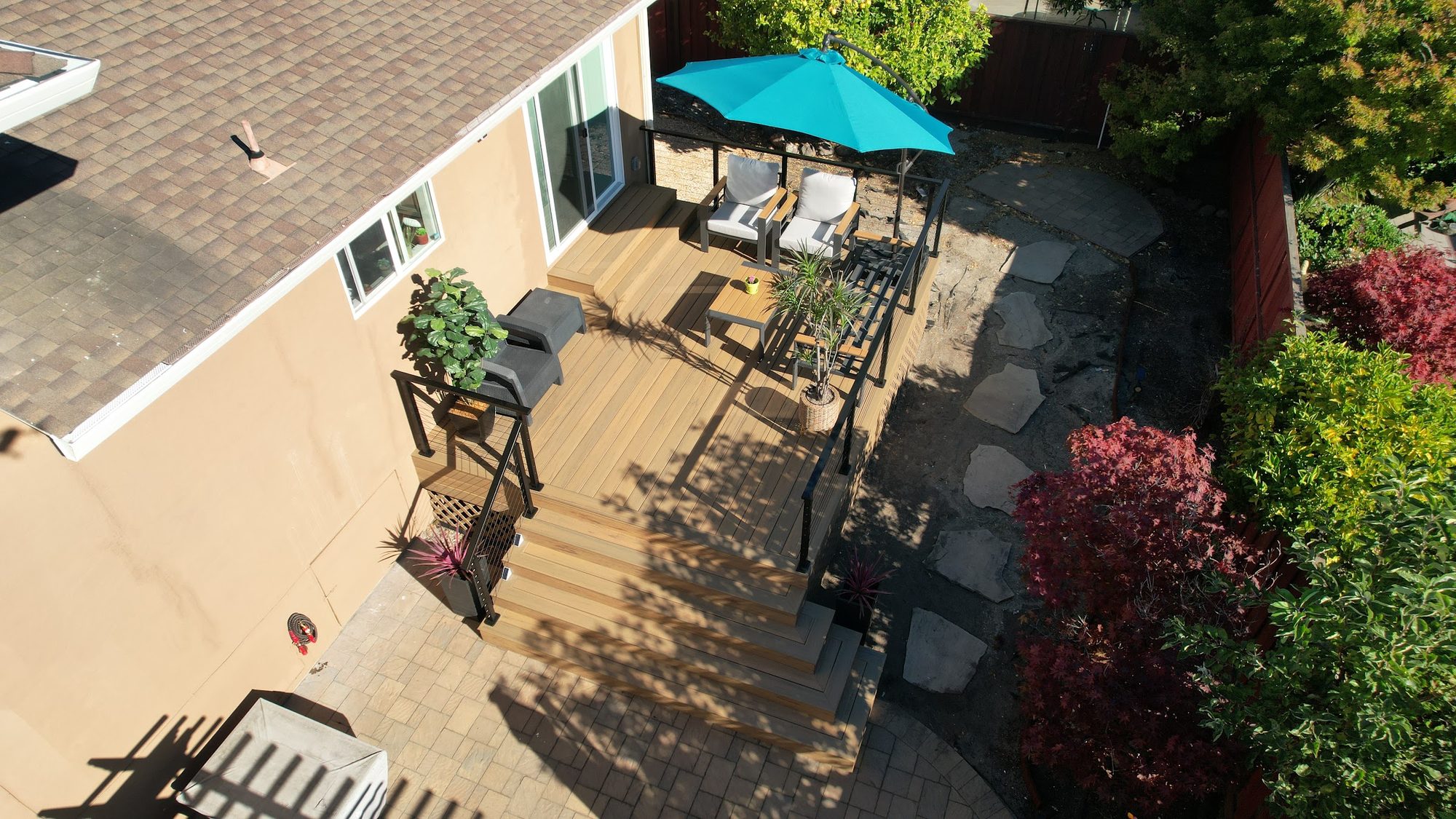
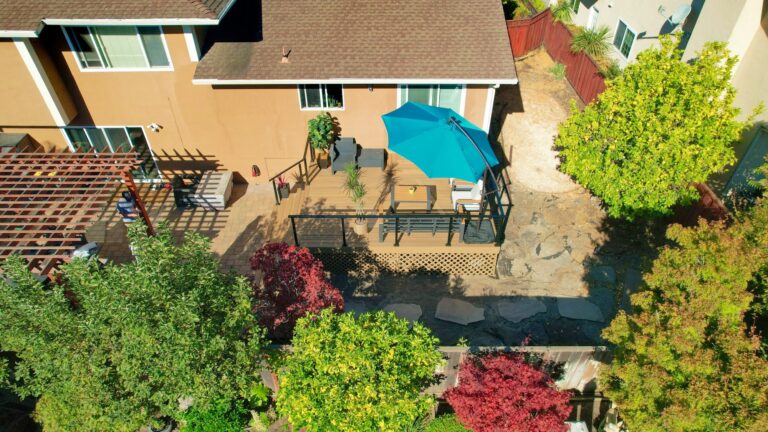
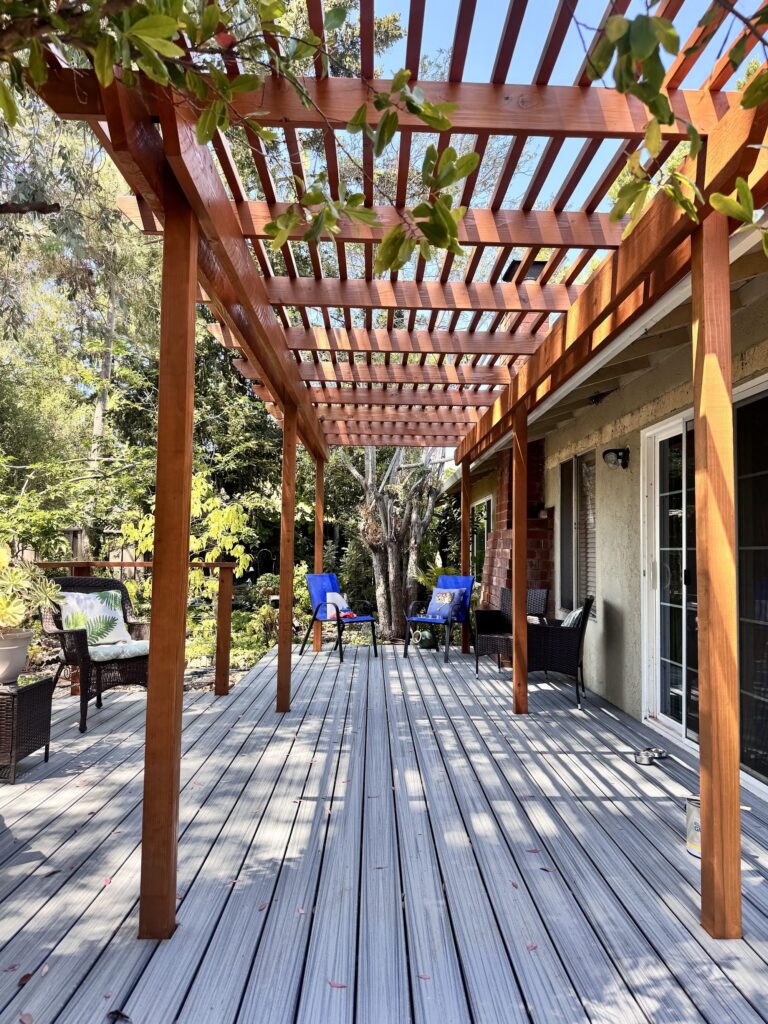
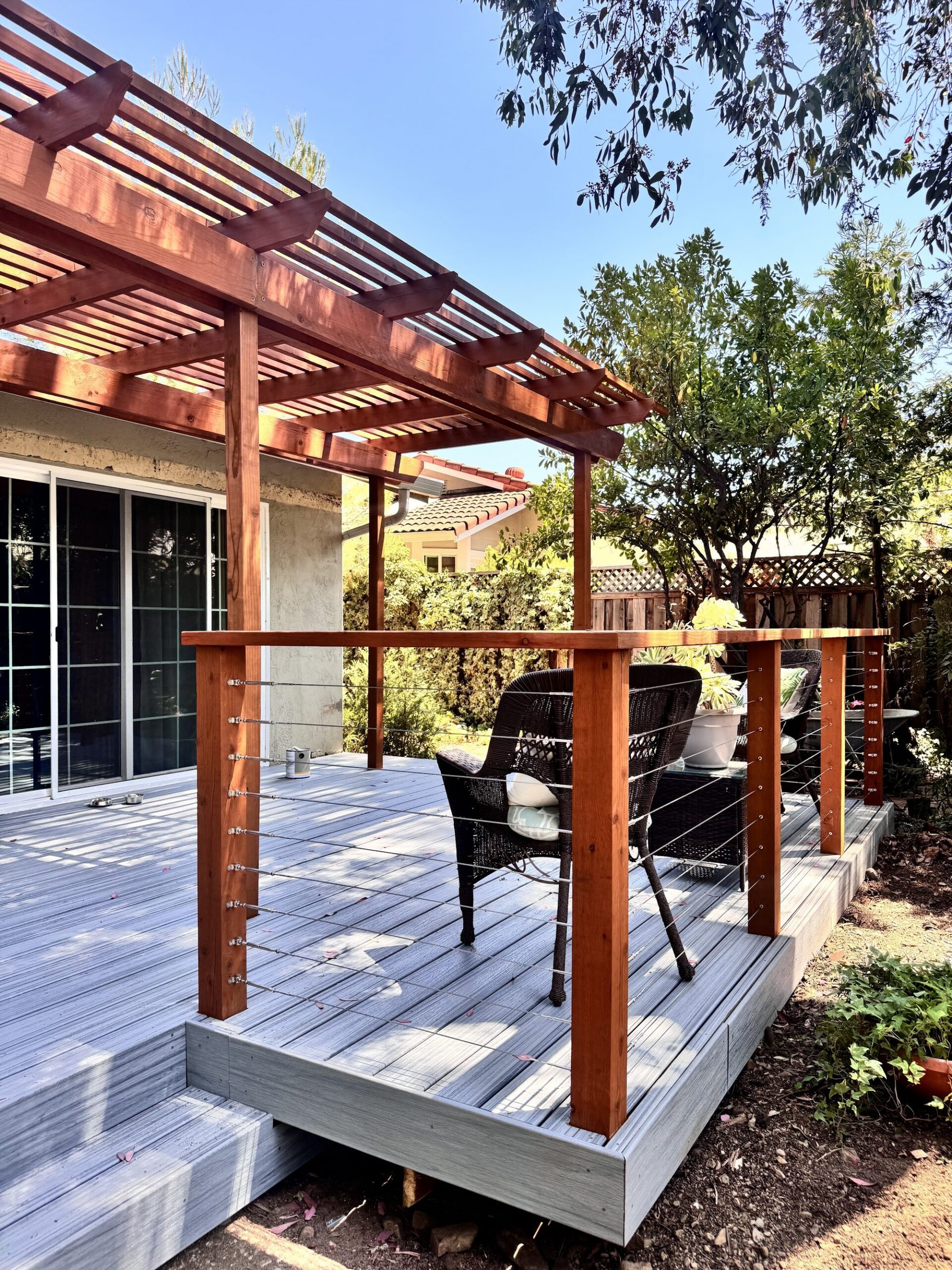
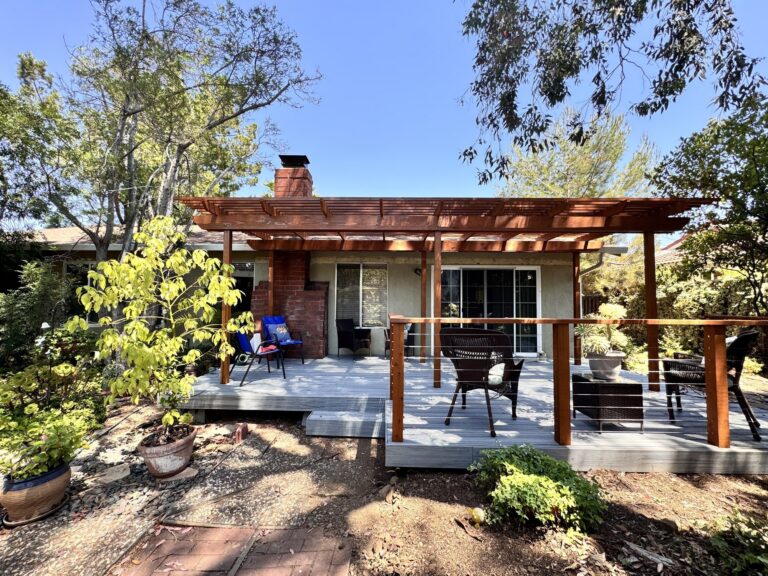
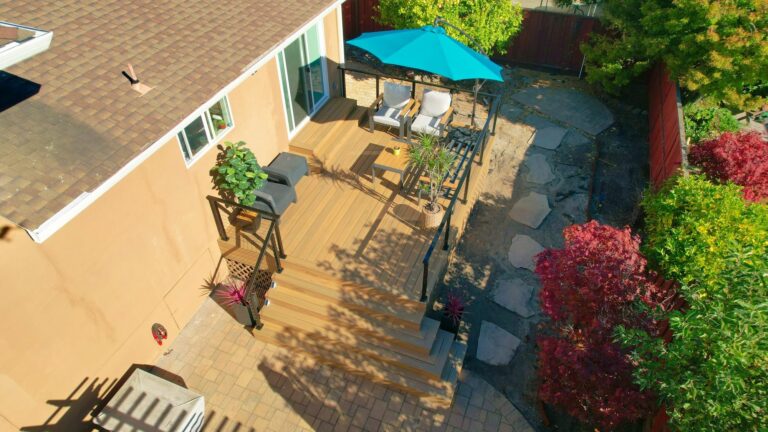
Photos from MAV Design & Build deck projects. Locations are not stated unless independently confirmed.
Frequently asked questions
What is the actual difference between composite decking and PVC decking?+
Do composite deck boards really get too hot to walk on in Houston?+
Do I need to seal or stain composite decking?+
Are termites a real concern for a Houston deck?+
What do the AWPA "UC" numbers on treated lumber actually mean?+
What does a deck cost to build in the Houston area?+
From MAV’s video team
Read the transcript
Your patio can be so much more A place to relax right outside your door See it in 3D before you start With MAV Design and Build it’s done smart Custom patio built your way Perfect for night and every day Get up to $3,000 credited back
Not sure which material fits your Houston backyard?
Tell us how you’ll use the deck and how much maintenance you actually want to do. We’ll walk through the real trade-offs and give you MAV’s actual published cost range for your project.
Book a Deck ConsultationCall (832) 532-6829See MAV’s deck construction services for the full process, composite deck construction and wood deck construction for material-specific detail, and covered decks if heat and sun exposure are the deciding factor for your yard. Ready to talk specifics? Contact MAV or call (832) 532-6829.
For a side-by-side look at MAV’s own published deck and patio planning ranges, see deck & patio installation cost in Houston.
- Trex: Decking & Railing Warranty
- Trex: Composite Decking & Railing FAQs
- TimberTech: Warranty Information
- Preserved Wood (industry summary of the AWPA Use Category System / AWPA U1)
- NOAA/National Weather Service: Houston (IAH) Climate Normals, 1991–2020
- Texas A&M AgriLife Extension, Urban Entomology: Formosan Subterranean Termite
- MAV Design & Build: Deck Construction (published cost ranges)
All facts above were checked against these primary sources on September 25, 2026. No per-material or per-square-foot dollar figures are used anywhere in this article because MAV has not published any; only the two total-project ranges on MAV’s own Deck Construction page are cited. No lifespan-in-years figure is stated for wood, cedar or ipe because none of the sources above publish one for those materials — only manufacturer-stated WARRANTY years are cited for composite and PVC, and are labelled as warranty terms, not lifespan.