

Homes built roughly from the 1950s through the 1990s can turn up things nobody expected once demolition starts — old wiring, old pipe, old paint, or moisture behind the cabinets. Here’s what commonly surfaces by decade, who tests and remediates it, and how a remodel can be planned around what’s found.
Book a Kitchen Remodel ConsultationCall (832) 532-6829Sources: U.S. EPA RRP Rule (40 CFR Part 745 Subpart E); Texas mold assessment/remediation licensing rules (TDLR). Checked October 25, 2026.
What should I check before opening up an older Houston kitchen?
Before demolition starts on a kitchen in a home built roughly in the 1950s–1990s, it’s worth knowing what’s commonly found behind the walls and under the floor for that era: lead-based paint if built before 1978, asbestos-containing materials in old flooring, mastic, joint compound or texture, aluminum branch wiring if wired 1965–1973, aging galvanized or cast-iron plumbing or polybutylene supply pipe if built 1978–1995, water damage or mold behind cabinets, and an uneven subfloor. Testing and any remediation are handled by licensed or certified specialists for each issue; MAV can plan the kitchen remodel around what they find.
Common issues in an older kitchen, by category
The decades, and what commonly dates to each one
+View as table
| Item | From | To |
|---|---|---|
| Aluminum branch wiring commonly installed (CPSC) | 1965-01-01 | 1973-12-31 |
| Polybutylene supply pipe commonly installed | 1978-01-01 | 1995-12-31 |
| 1978 — lead-based paint banned for residential use | 1978-01-01 | — |
Source: U.S. CPSC Publication 516 (aluminum wiring); Polybutylene installation history, widely documented including the 1995 Cox v. Shell Oil Co. class-action settlement; U.S. EPA RRP Rule treats 1978 as the residential lead-paint cutoff. Checked October 25, 2026.
+View as table
| Item | Value (sq ft) |
|---|---|
| EPA RRP interior lead-paint disturbance threshold | 6 |
| Texas TDLR mold assessment/remediation licensing threshold (contiguous) | 25 |
Source: U.S. EPA RRP Rule, 40 CFR Part 745 Subpart E; Texas mold assessment and remediation rules, TDLR. Checked October 25, 2026.
Lead-based paint (homes built before 1978)
The EPA’s Renovation, Repair and Painting (RRP) Rule, 40 CFR Part 745 Subpart E, applies to renovation work in housing built before 1978. Disturbing more than 6 square feet of painted surface per room on the interior (20 square feet on the exterior) requires the work to be performed using EPA-certified lead-safe work practices, by a firm that is itself EPA-certified. See EPA — RRP Rule for contractors.
MAV is not a lead-abatement contractor. If your home was built before 1978, testing and any required lead-safe work on painted surfaces is handled by an EPA-certified renovator and firm; MAV can plan the kitchen scope around what that testing finds.
Asbestos-containing materials
Depending on the age of the home, materials commonly found during a kitchen opening can include old vinyl floor tile and its black or tan adhesive (mastic), joint compound, and popcorn ceiling texture — any of which can contain asbestos; see the EPA’s asbestos overview. Under the federal Asbestos NESHAP, 40 CFR Part 61 Subpart M, the regulation’s definition of a covered “facility” expressly excludes “residential buildings having four or fewer dwelling units” — see 40 CFR Part 61, Subpart M, §61.141. Texas’s asbestos program is administered by the Texas Department of State Health Services. That federal exclusion is about which projects trigger the NESHAP’s notification/survey paperwork, not about whether a material actually contains asbestos — testing suspect materials before demolition is still the safer approach.
MAV is not an asbestos-abatement contractor. If a suspect material turns up once demolition starts, testing and any abatement is handled by a certified asbestos professional, and MAV can plan the remodel scope around the result.
Aluminum branch wiring & electrical safety
Homes wired between roughly 1965 and 1973 commonly used aluminum branch-circuit wiring. The U.S. Consumer Product Safety Commission has documented that the risk concentrates at connections — outlets, switches, and junction boxes — where the aluminum can loosen and overheat over time, not in the wire run itself; see CPSC Publication 516. A licensed electrician evaluates the specific connections and recommends a repair approach.
Separately, the National Electrical Code generally requires GFCI protection for kitchen receptacles under NEC 210.8(A)(6) — the exact receptacles covered and the countertop-distance rule have changed across code cycles, and the locally adopted NEC edition varies by jurisdiction. Confirm the current requirement for your home with a licensed electrician or the Houston Permitting Center rather than assuming a specific edition; see IAEI — Kitchens and GFCI protection.
Old supply & drain lines
| Material | What to know |
|---|---|
| Galvanized steel supply pipe | Corrodes from the inside out over time and can develop internal mineral buildup; service life varies widely by water conditions and installation. See Professional Engineering — galvanized pipe aging. |
| Cast-iron drain pipe | Typical inspection-industry estimates put service life in a wide range depending on installation quality, soil, and maintenance. See InterNACHI — cast iron drain pipe life expectancy. |
| Polybutylene supply pipe | Commonly installed 1978–1995 before being pulled from the market; its failure pattern is well documented, including the 1995 Cox v. Shell Oil Co. class-action settlement. See Polybutylene — installation history. |
A licensed plumber inspects the specific supply and drain lines behind your cabinets during a remodel and recommends what, if anything, needs replacing.
Water damage & mold behind cabinets
The EPA’s guidance is that the key to mold control is moisture control: fix the water source, dry affected materials promptly, and remove what can’t be fully cleaned and dried. See EPA — A Brief Guide to Mold, Moisture and Your Home. In Texas, mold assessment or remediation covering 25 contiguous square feet or more must be performed by a TDLR-licensed mold assessor or remediation contractor; see TDLR — mold program consumer information.
MAV is not a mold remediation contractor. If moisture damage or suspected mold is found behind cabinets, a licensed specialist assesses and remediates it, and MAV can plan the cabinet and finish work around that timeline.
Uneven floors, unpermitted work & historic homes
Settling over the decades can leave an older subfloor out of level, which affects how base cabinets sit and how countertops come out level — this needs an on-site evaluation of your specific floor rather than a general rule. Older homes sometimes also carry prior electrical, plumbing, or structural work done without a permit; see MAV’s guide to what permits are required for remodeling in Houston for how new permitted work can interact with existing unpermitted changes.
If your home is inside a City of Houston historic district, the Houston Office of Preservation’s own published guidance lists “interior alterations, changes not visible from the street” as exempt from historic-district regulation, while exterior changes visible from the street — additions, replacement of doors/windows/siding, a change in roof shape or pitch — are what the district review covers. Confirm your property’s district status with the City’s Planning & Development Department before assuming either way; see Houston Office of Preservation — What’s Exempt From Regulation (City of Houston, Jan. 2021).
- 1Lead paintEPA-certified renovator & firmRequired for lead-safe work practices on pre-1978 homes once the disturbance threshold is crossed.
- 2AsbestosCertified asbestos professionalTests and, if needed, abates suspect materials before demolition disturbs them.
- 3ElectricalLicensed electrician (TDLR)Evaluates aluminum wiring connections and GFCI protection, and performs any repair or rewiring.
- 4PlumbingLicensed plumber (TSBPE)Evaluates galvanized, cast-iron, or polybutylene lines and recommends replacement where needed.
- 5Mold ≥25 sq ftTDLR-licensed mold assessor/remediatorRequired by Texas rule once contiguous mold-affected area reaches 25 square feet.
- 1AskHow do you plan around what’s found?Ask how the remodel scope and schedule adjust once a licensed specialist reports findings, rather than assuming what’s behind an older wall.
- 2AskWhat happens if a suspect condition turns up?Ask whether work in that area pauses for testing before demolition continues further.
- 3AskHow is the schedule coordinated?Ask how the remodel schedule is coordinated around a specialist’s testing and remediation timeline.
Ask MAV how it plans a specific kitchen remodel around a licensed specialist’s findings before demolition starts.
Tick each one off as your contractor answers it.
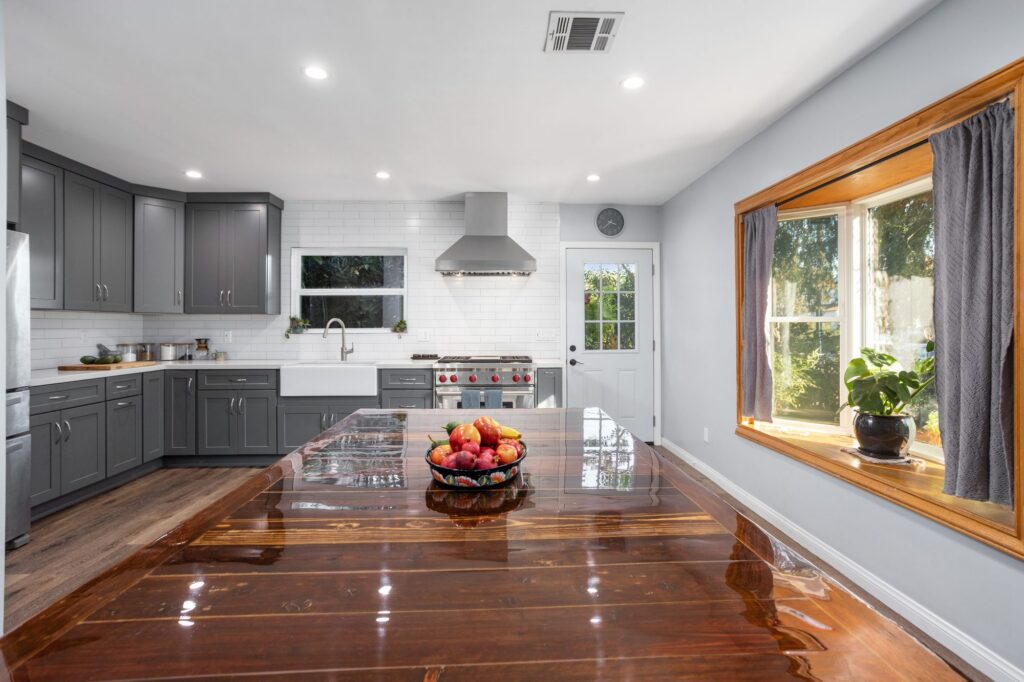
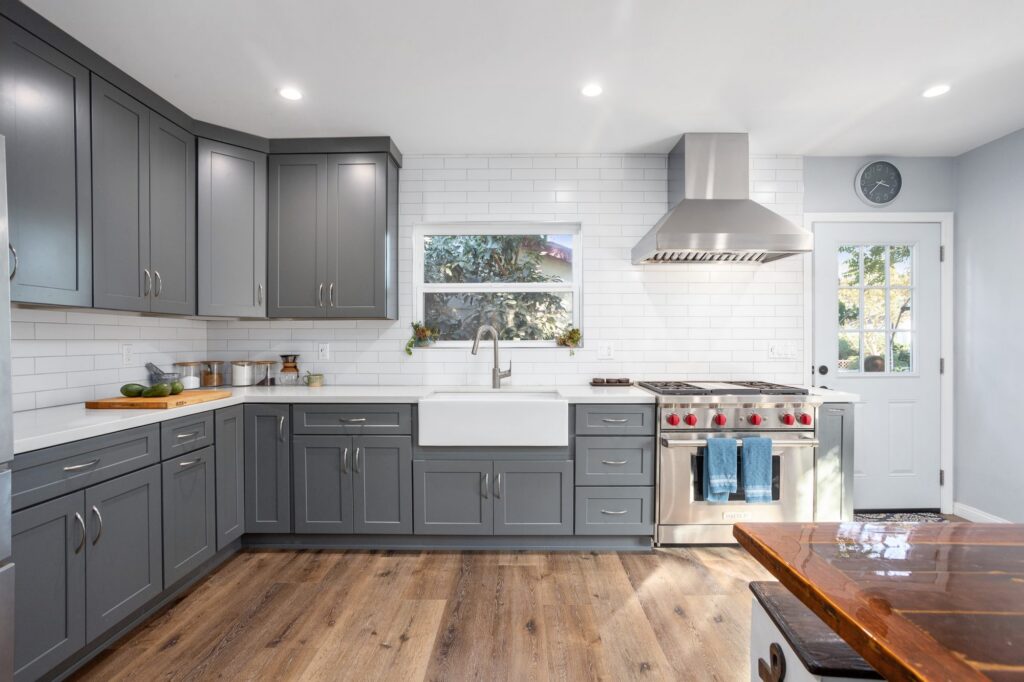
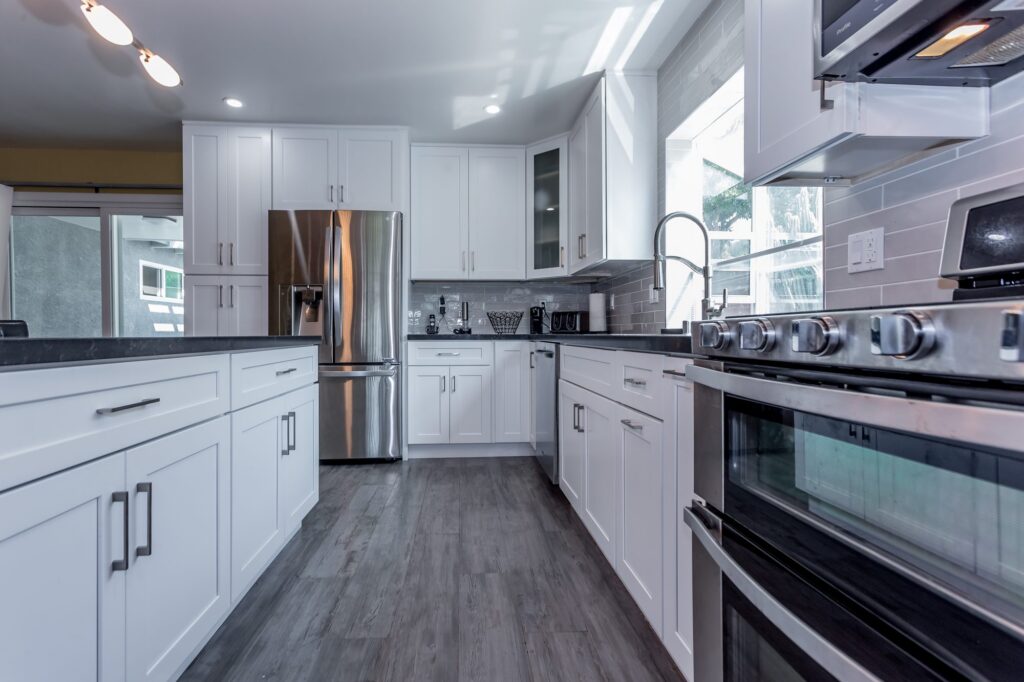
MAV kitchen project — gray shaker cabinetry
Completed MAV kitchen project; location not published.
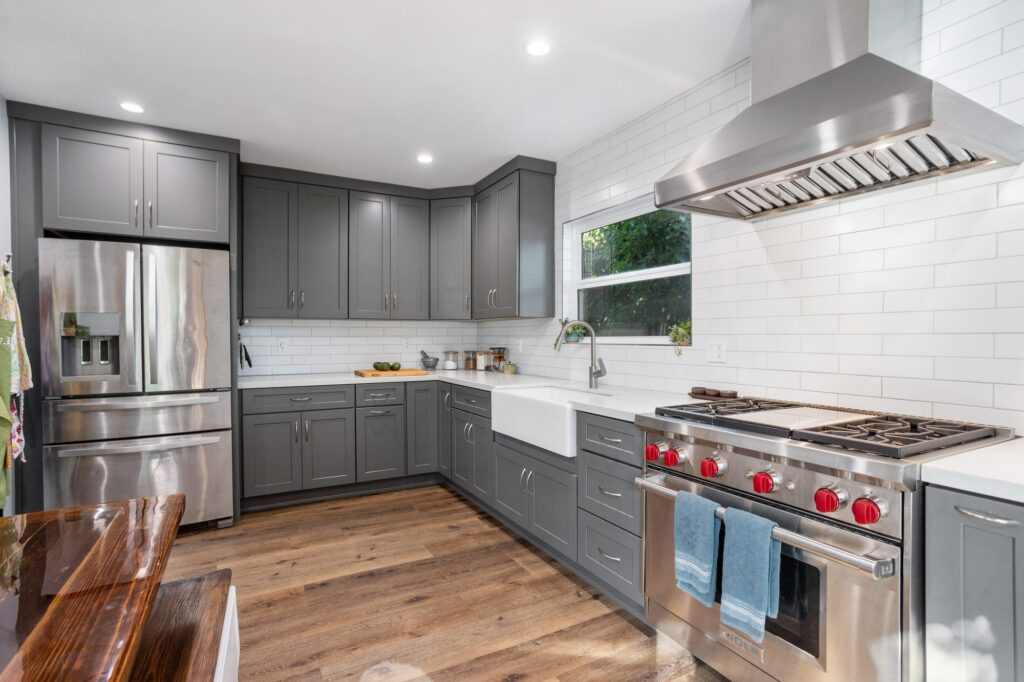
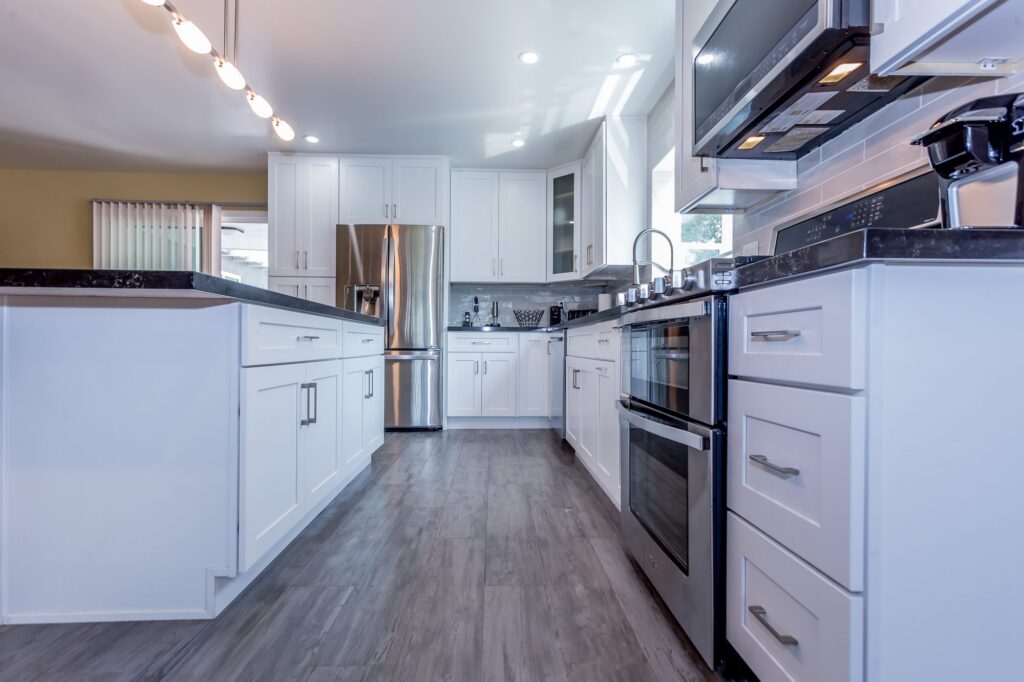
MAV kitchen project — stainless appliances, open layout
Completed MAV kitchen project; location not published.
Verified Google reviews from MAV Design & Build kitchen remodeling clients.
“I’m extremely satisfied with my kitchen renovation. The entire process was handled with professionalism and precision.”
“Thank you very much to mav design and build for the work that you done in my kitchen. It’s absolutely amazing.”
“Love their work, the kitchen turned out amazing and exceeded our expectations and BTW it was completed in much shorter amount of time than I thought it would. Can’t recommend them enough!!”
About MAV Design & Build
Frequently asked questions
What should I know before remodeling a historic home kitchen?+
What problems are common in older kitchens?+
Will older electrical wiring need to be replaced?+
What if my plumbing needs updating?+
What happens if water damage is discovered behind cabinets?+
How should suspected mold be handled?+
Should older materials be checked for lead or asbestos before demolition?+
Can uneven floors affect cabinet installation?+
Planning a kitchen remodel in an older Houston home?
MAV can plan the kitchen remodel around what a licensed specialist finds behind your walls, floor, and cabinets.
Book a Kitchen Remodel ConsultationCall (832) 532-6829Older kitchens, fully remodeled
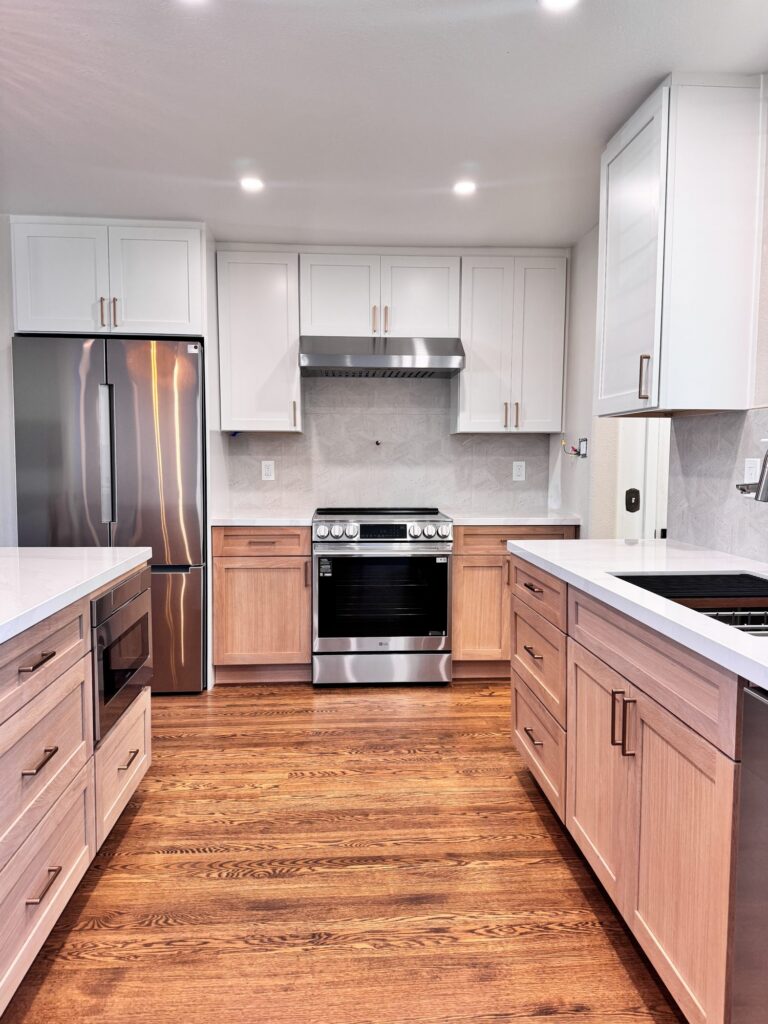
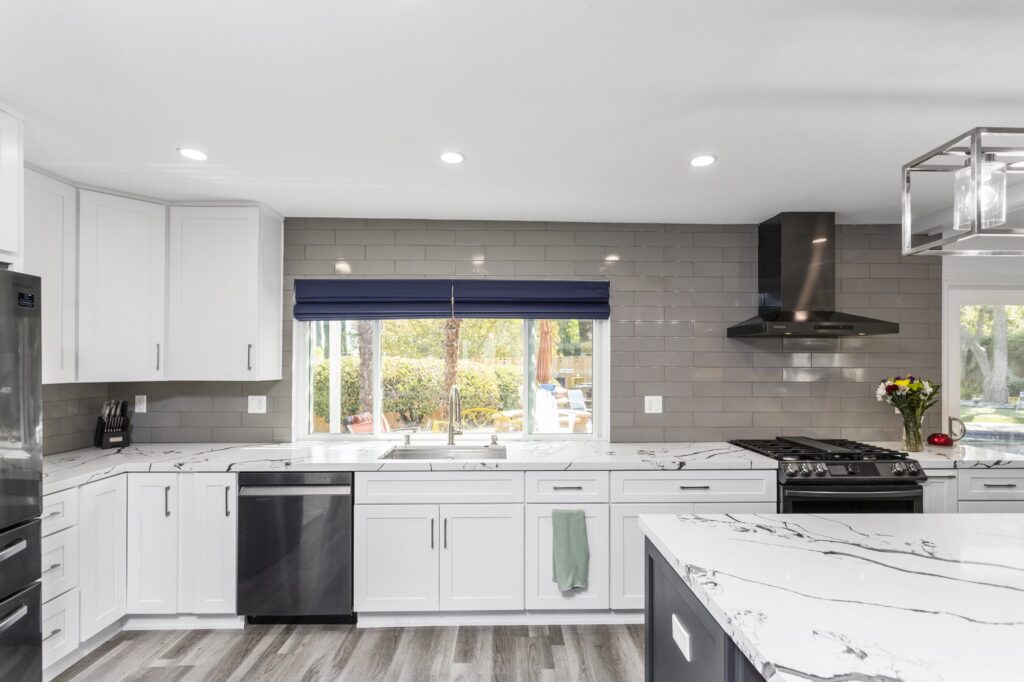
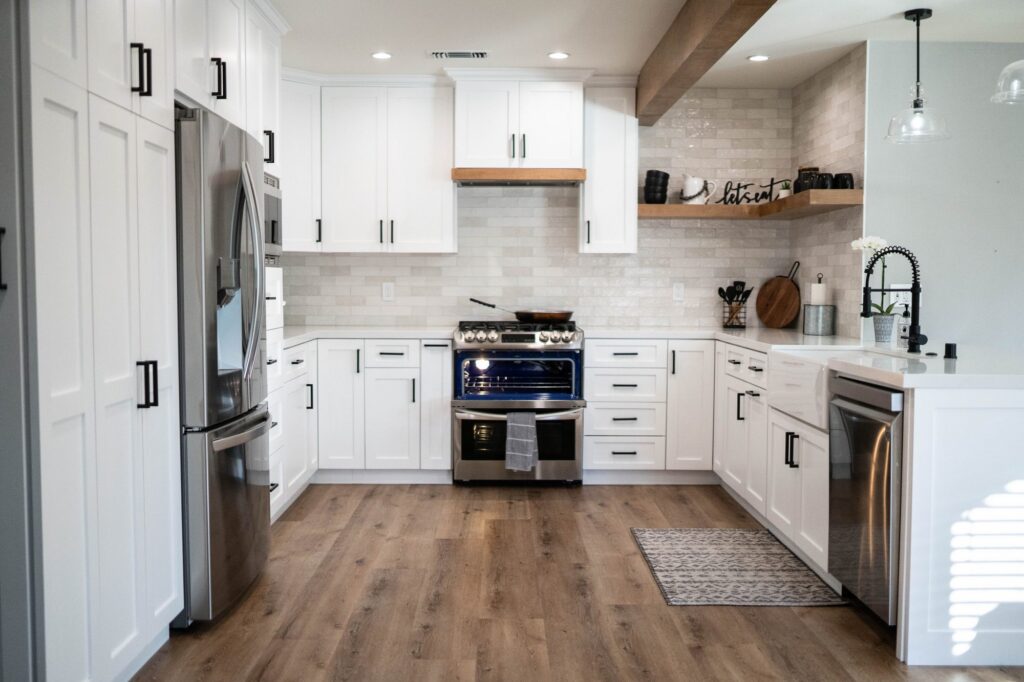
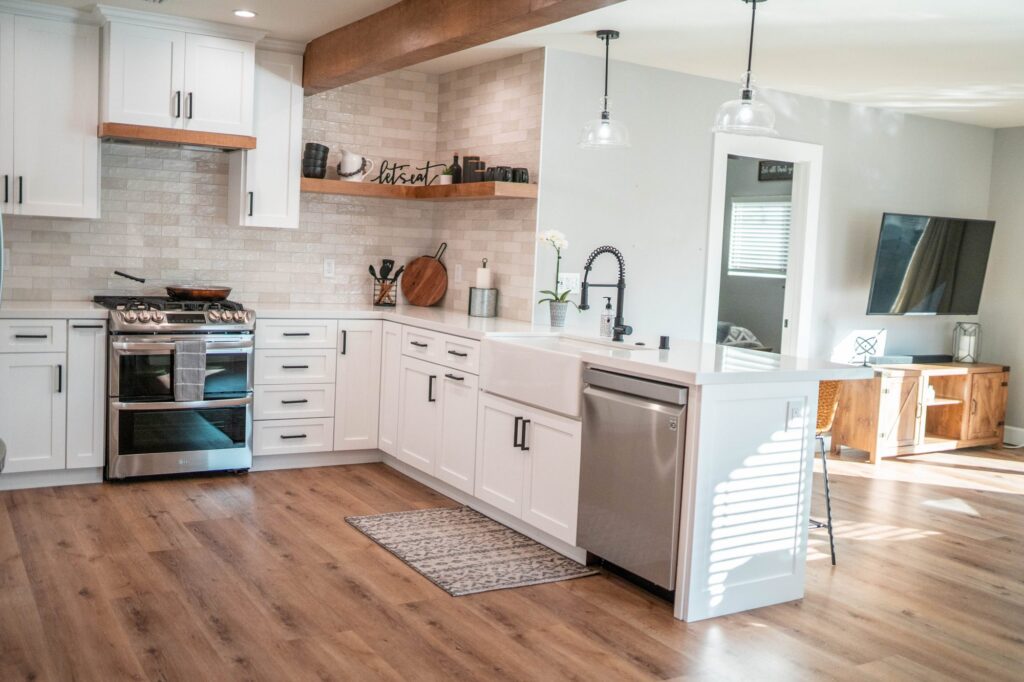
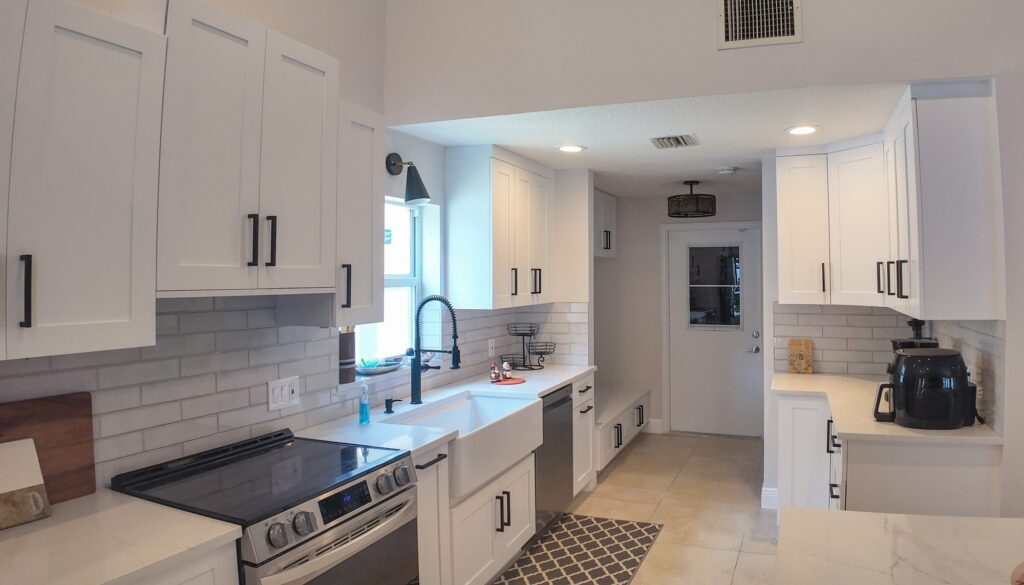
Completed remodels in established homes. Locations are not published.
From MAV’s video team
Read the transcript
Houston, Texas homeowners. If your kitchen feels outdated, your whole home feels outdated. With MAV Design and Build, we create luxury kitchens designed for real living, entertaining, and everyday function. Get a free 3D design with custom cabinetry planning, optimized workflow, premium finishes, and smart storage solutions. Everything is planned before construction begins. Plus, receive up to $5,000 credit toward your kitchen remodel. Click below to start your kitchen consultation today.
Related kitchen guides
Read the guide →
Read the guide →
Read the guide →
Browse every guide in MAV’s kitchen remodeling guide library.
If this remodel involves removing a wall, see MAV’s guide to load-bearing wall removal and when you need an engineer’s letter. For permit basics, see what permits are required for remodeling in Houston. For range-hood ventilation code, see range hood CFM & makeup-air code, and for opening a kitchen to an adjoining room, see open-concept kitchen renovation.
For MAV’s full kitchen service, see kitchen remodeling in Houston.
- U.S. EPA — Renovation, Repair and Painting (RRP) Rule for contractors, 40 CFR Part 745 Subpart E
- U.S. EPA — Asbestos overview
- eCFR — 40 CFR Part 61, Subpart M (Asbestos NESHAP), §61.141 facility definition
- Texas Department of State Health Services — Asbestos Program
- U.S. CPSC Publication 516 — Repairing Aluminum Wiring
- IAEI Magazine — Kitchens, Food/Beverage Prep Areas and GFCIs (NEC 210.8)
- Professional Engineering — galvanized pipe aging expectations
- InterNACHI forum — cast iron drain pipe life expectancy
- Polybutylene — installation history and litigation (Wikipedia, cross-corroborated)
- U.S. EPA — A Brief Guide to Mold, Moisture and Your Home
- TDLR — mold assessment/remediation consumer information
- Houston Office of Preservation — What’s Exempt From Regulation (historic districts)
Sources checked October 25, 2026. Testing and remediation for lead, asbestos, electrical, plumbing and mold conditions should be performed by the appropriate licensed or certified specialist for your specific home; this page is general information, not an inspection report.
I'm extremely satisfied with my kitchen renovation. The entire process was handled with professionalism and precision. The crew was respectful, efficient, and always made sure I was informed every step of the way. The final result — a beautiful, well-designed kitchen with top-quality finishes and excellent craftsmanship.
Love their work, the kitchen turned out amazing and exceeded our expectations. Completed in much shorter time than I thought it would. Can't recommend them enough!!
Great experience working with this company! They remodeled my kitchen and did an amazing job. The team was professional, easy to work with, and always on time. Everything went smoothly, and they paid attention to the small details.