

Two contractors can walk through the same kitchen and hand you two very different numbers — and the gap is almost never random. Here’s exactly what an itemized estimate should list, how to compare bids that use different allowances, and what Texas law actually says about your contract.
Book a Kitchen Remodel ConsultationCall (832) 532-6829Sources: Texas Property Code §53.101; 16 CFR Part 429 (FTC Cooling-Off Rule); Texas Constitution art. XVI §50(a)(5). Checked October 25, 2026.
What should an itemized kitchen remodel estimate include?
A complete kitchen remodel estimate itemizes design, demolition and disposal, cabinets, countertops, tile, plumbing/electrical/gas work, whether appliances are included, whether permit fees are included, finishes, and cleanup — with a specific dollar allowance for anything not yet selected. If a bid is one lump-sum number with no breakdown, ask for an itemized version before comparing it to anything else.
What belongs on every itemized estimate
| Line item | What a complete estimate specifies |
|---|---|
| Design & drawings | Whether a design/layout fee is a separate line or folded into the total, and what it covers (floor plan, elevations, 3D renderings). |
| Demolition & disposal | Removal of existing cabinets, counters, flooring and fixtures, plus haul-away/dumpster cost — confirm it is not left as “by owner.” |
| Cabinets | Cabinet line/grade and box construction if selected, or a stated dollar allowance if not yet chosen. |
| Countertops | Material category and a $/sq ft allowance if the exact slab or stone hasn’t been picked yet. |
| Tile & backsplash | A per-square-foot or lump allowance for backsplash and any floor tile included in the scope. |
| Plumbing, electrical & gas | What rough-in and fixture work is included — sink/faucet relocation, new circuits, gas line changes for a range or hood. |
| Appliances | Whether appliances are included at a stated allowance or excluded entirely so the owner buys them separately. |
| Permits | Whether permit fees are included in the total or billed separately to the owner. |
| Paint & finishes | Walls, trim, and any ceiling work included in the scope. |
| Cleanup | Final construction cleaning before the walkthrough. |
Allowances — comparing bids that use different numbers
An allowance is a placeholder dollar amount built into the estimate for a material or fixture you haven’t picked yet — cabinet hardware, a specific tile, a plumbing fixture, a lighting package. Two bids with identical construction scope can land on very different totals simply because they assign different allowance dollars to the same unselected items.
Pick what’s true about the written estimate in front of you:
Tick each one off as your contractor answers it.
Who supplies the materials — you or the contractor?
Some owners want to buy a specific tile, fixture, or appliance themselves rather than use the contractor’s allowance. That can work, but it shifts responsibility: owner-supplied items are usually not covered by the contractor’s workmanship warranty if they fail or arrive damaged, and a late or wrong delivery on an owner-supplied item can push the schedule the same way a backordered contractor-supplied item would. Ask directly, for each major material category, whether the contractor is supplying it or you are — and get the answer in writing as part of the estimate, not assumed.
Hidden conditions & contingency, without a scary number
Once demolition opens a wall or pulls up flooring, a kitchen remodel can turn up conditions nobody could see beforehand — outdated wiring, aging plumbing, water damage, or an uneven subfloor. There’s no single, universal contingency percentage that applies to every project, and a number invented without a source isn’t useful to you. What matters is asking two direct questions before you sign: does this estimate include a contingency line for conditions found after demolition, and if something unexpected turns up, is it priced and approved as a written change order before the work happens — or added to the bill afterward?
Change orders — written, priced, approved before work continues
A change order is simply a documented change to the original contract — a different tile, an added outlet, a condition found behind a wall. On a well-run project, every change order describes the change, states the price impact as an add or a credit to the contract total, and is signed by the owner before the revised work begins. A change that shows up only as a surprise line on the final invoice is a sign the process wasn’t followed.
- 1Step 1The change is described in writingWhat is changing from the original scope, and why — a selection change, a hidden condition, or an owner request.
- 2Step 2The price impact is statedAn add or a credit against the contract total, shown as its own number, not folded silently into a later draw.
- 3Step 3The owner approves it before work startsA signature or written confirmation on the change order itself — not a verbal okay followed by an invoice.
Payment schedule, the contract & your rights under Texas law
General information, not legal advice — for a specific contract or dispute, consult a licensed Texas attorney.
| What the contract should state | Why it matters |
|---|---|
| Scope of work tied to the estimate | The contract should reference the same itemized scope and allowances you compared, not a vaguer summary. |
| Total price & payment schedule | Draws tied to completed milestones rather than only to calendar dates. |
| Estimated start & substantial-completion dates | A stated timeframe gives both sides a reference point if the schedule slips. |
| Written change-order procedure | How changes will be priced, documented, and approved once work is underway. |
| Warranty terms | What is covered, for how long, and whether it is separate from manufacturer warranties on products. |
| Who pulls permits | Whether the contractor or the owner is responsible for permit applications and fees. |
Texas law adds specific protections to a residential construction contract. Retainage: under Property Code §53.101, the owner must hold back 10 percent of the contract price (or of the value of completed work) during construction and for 30 days after completion. Disclosure statement: under §53.255, the original contractor must deliver a written disclosure statement to the owner before a residential construction contract is signed. See the full chapter at Texas Property Code, Chapter 53.
If the remodel is financed with a loan secured against your home: the Texas Constitution (art. XVI, §50(a)(5)) requires the work and materials to be contracted for in writing (with both spouses’ consent for a family homestead), the contract not to be signed before the fifth day after the owner’s written credit application, the contract to be signed only at the office of the third-party lender, an attorney, or a title company, and the contract to give the owner a 3-day right to rescind without penalty — with narrow exceptions for immediate health-or-safety repairs acknowledged in writing. See Texas Constitution, Article XVI. Property Code §41.007 separately requires a conspicuous, bold-type warning notice in a homestead home-improvement contract — see Property Code §41.007.
The FTC Cooling-Off Rule (16 CFR Part 429) gives a 3-business-day right to cancel a qualifying sale of $25 or more when it is signed at the buyer’s home — it generally does not apply to a contract signed at a contractor’s office or other permanent place of business. See 16 CFR Part 429.
Texas has no statewide general-contractor license — see the licensing programs TDLR administers, which does not include a general-contractor credential. Specific trades are licensed separately: electricians through TDLR and plumbers through the Texas State Board of Plumbing Examiners.
+View as table
| Item | Value (days) |
|---|---|
| FTC Cooling-Off Rule cancellation window (qualifying $25+ sale signed at home) | 3 |
| Homestead lien contract rescission window (Tex. Const. art. XVI §50(a)(5)) | 3 |
| Statutory retainage held after completion (Property Code §53.101) | 30 |
Source: Texas Property Code §53.101; Texas Constitution art. XVI §50(a)(5); 16 CFR Part 429. Checked October 25, 2026.
- 1Good practiceItemized scope & stated allowancesThe same breakdown used to compare bids, not a vaguer summary of the work.
- 2Good practicePayment schedule tied to milestonesDraws released as work is completed, with a written change-order procedure for anything that changes along the way.
- 3Good practiceStatutory protections honoredRetainage held per §53.101, a disclosure statement delivered per §53.255, and homestead-lien formalities followed when a home-secured loan is financing the work.
- 1AskIs the estimate itemized by scope?Request a written breakdown rather than a single lump-sum number, with a dollar allowance for anything not yet selected.
- 2AskHow are change orders documented?Ask how a change’s scope and price get documented and approved before the revised work begins.
- 3AskWhat does closeout look like?Ask what the punch list and final walkthrough process looks like at project completion.
Ask MAV to walk you through its estimate line by line before you sign. Related reading: MAV’s guide to questions to ask a remodeling contractor and how to choose a remodeling contractor in Houston.
Delays — what causes them, and what to ask
Kitchen remodels commonly slip for a handful of recurring reasons: backordered cabinets, countertops, or appliances; a change order that expands the original scope; permit or inspection scheduling; a hidden condition discovered once demolition starts; and, for any work tied to exterior access, weather. If a contractor promises an unusually fast timeline, ask what’s included in that number — does it assume materials already in stock, no change orders, and no inspection delays? A realistic answer to that question tells you more than the number itself.
Punch list, final walkthrough & closeout documents
- 1Step 1Punch listA written list of remaining small items — touch-up paint, hardware adjustments, a caulk line — walked and agreed with the contractor before final payment.
- 2Step 2Final walkthroughConfirm every punch-list item is resolved, test fixtures, appliances and outlets, and check that finishes match what was specified.
- 3Step 3Closeout documentsCollect product/appliance warranties and manuals, the final invoice marked paid, and, if permits were pulled, the final inspection record.
If a contractor abandons the job
If work stops before the contract is finished, document what was actually completed against the signed scope and what has already been paid, and request a written accounting from the contractor. Because Texas has no statewide general-contractor licensing board, there is no state GC license to file a complaint against the way there is for a licensed electrician (TDLR) or plumber (Texas State Board of Plumbing Examiners) — which makes the retainage held under Property Code §53.101 and the mechanic’s-lien framework in Property Code Chapter 53 especially relevant to understand. Consult a licensed Texas attorney about your specific situation; this page is general information, not legal advice.
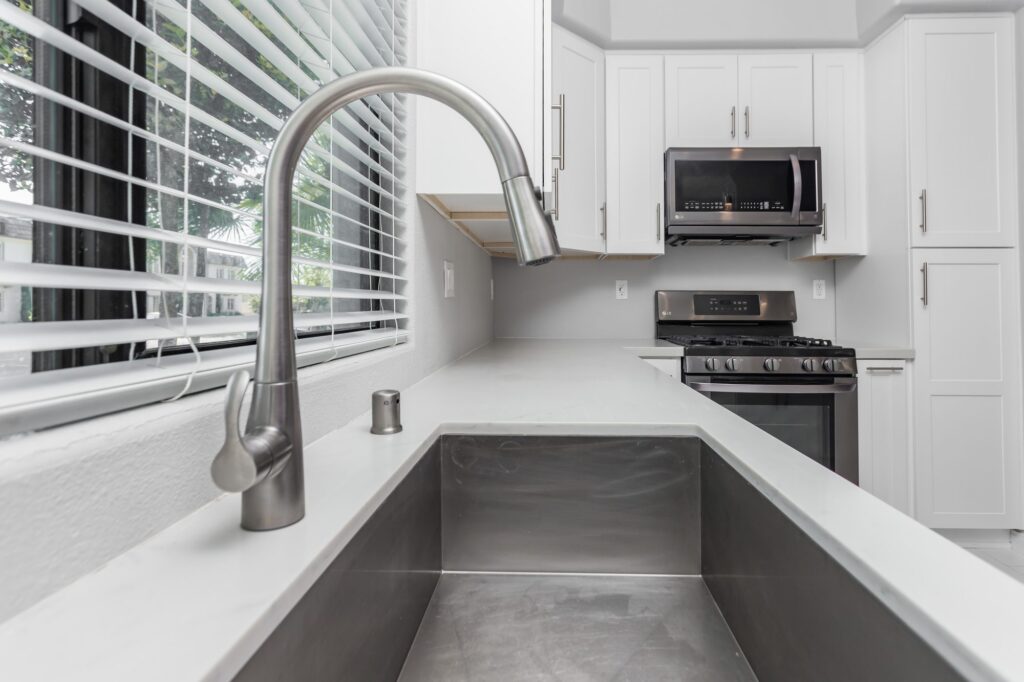
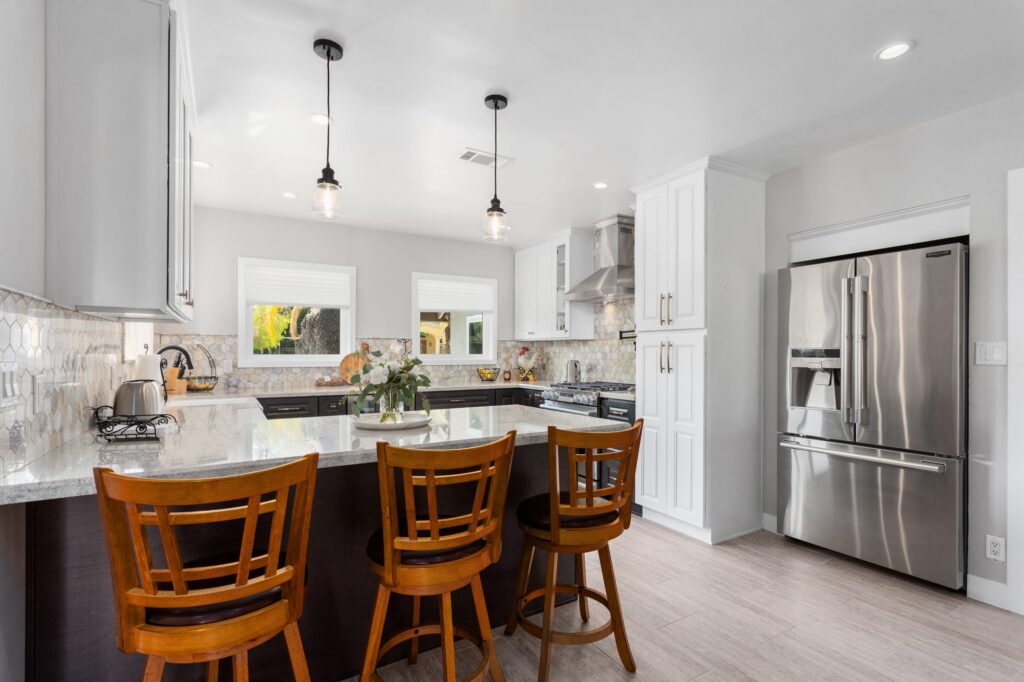
MAV kitchen project — a full remodel from layout to finishes
Completed MAV kitchen project; location not published.
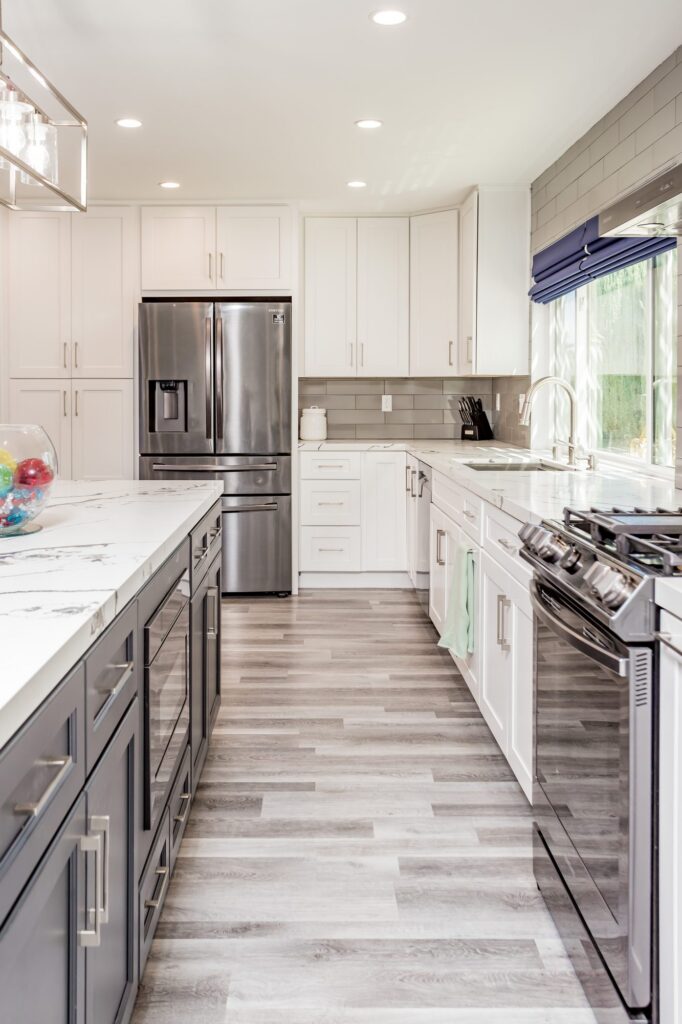
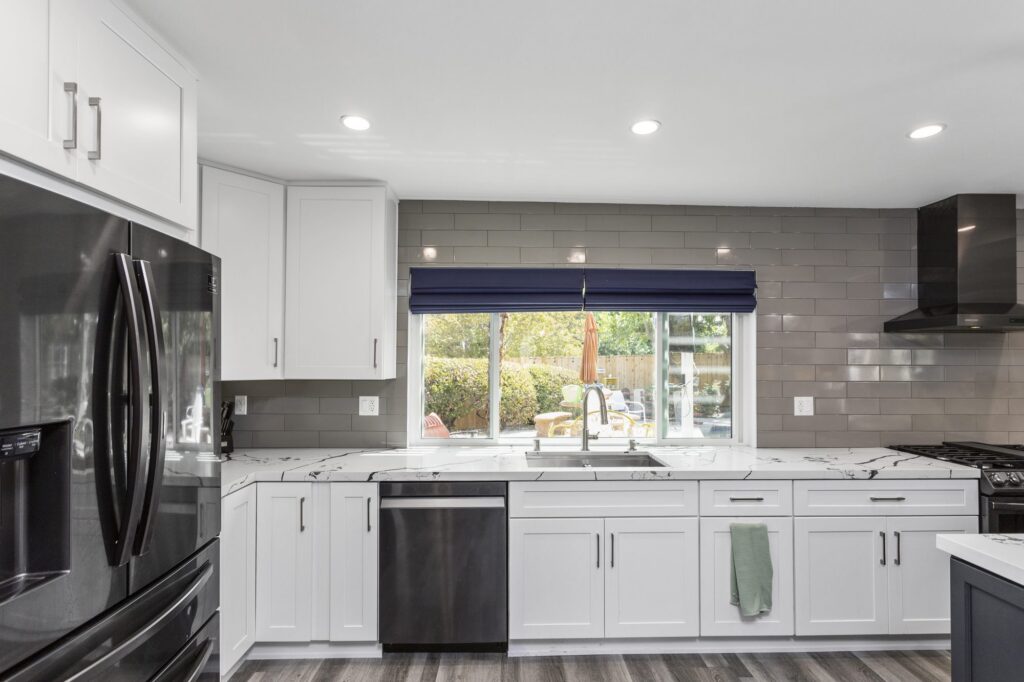
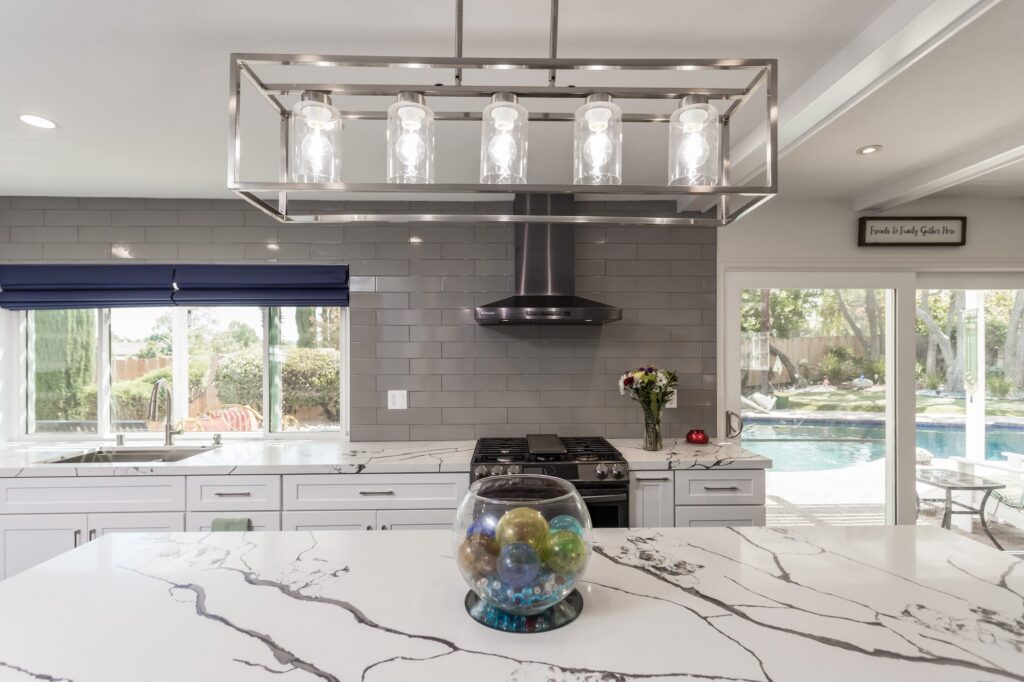
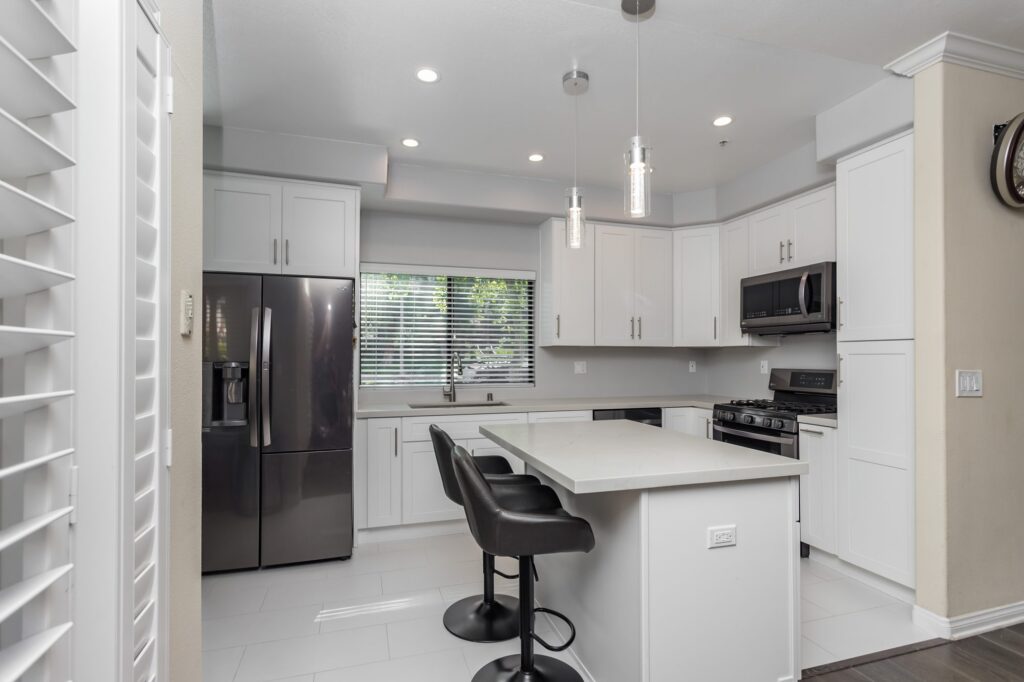
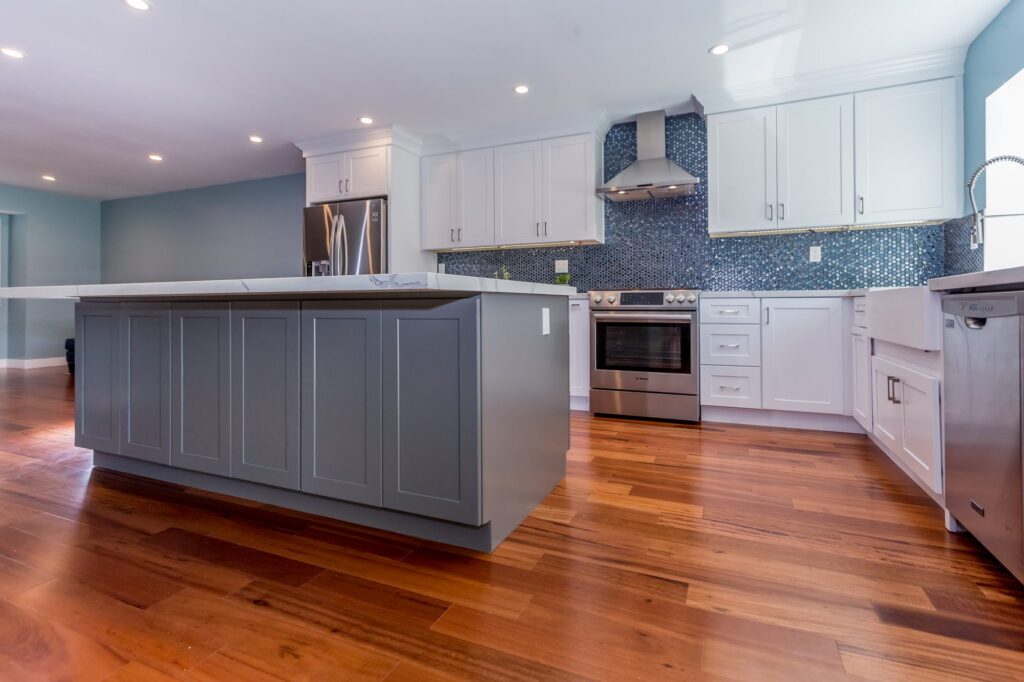
MAV kitchen project — white shaker cabinetry, open-concept layout
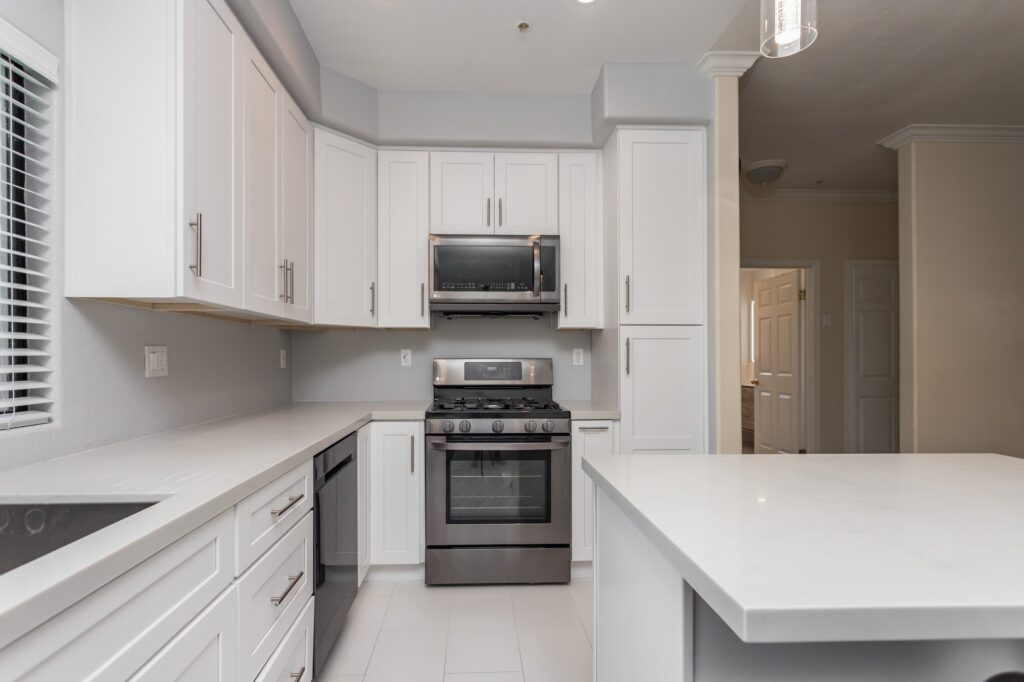
Completed MAV kitchen project; location not published.
Verified Google reviews from MAV Design & Build kitchen remodeling clients.
“Great experience working with this company! They remodeled my kitchen and did an amazing job. The team was professional, easy to work with, and always on time.”
“Really nice kitchen upgrade. The work was done on time and looks amazing.”
“We had a great experience with our kitchen renovation. The crew was easy to work with, very responsive, and kept everything clean and organized throughout the project.”
About MAV Design & Build
Frequently asked questions
What should an itemized kitchen remodeling estimate include?+
Does a kitchen remodeling estimate include appliances?+
Does a kitchen remodeling estimate include permits?+
Why are my kitchen remodeling quotes so different?+
How do I compare bids with different allowances?+
What warranty should I receive?+
How are change orders priced and approved?+
What should I do if my contractor leaves the job unfinished?+
Ready to get an itemized kitchen estimate?
MAV provides a written, itemized estimate for every kitchen remodel — and documents every change order before the work changes.
Book a Kitchen Remodel ConsultationCall (832) 532-6829What a finished scope looks like
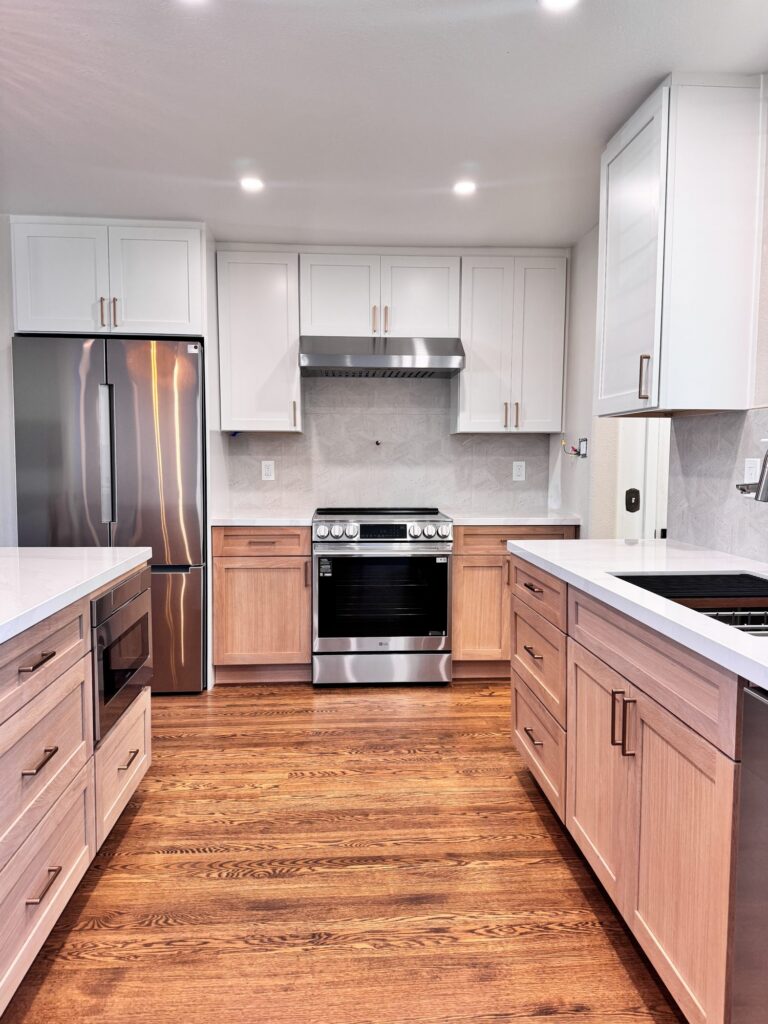
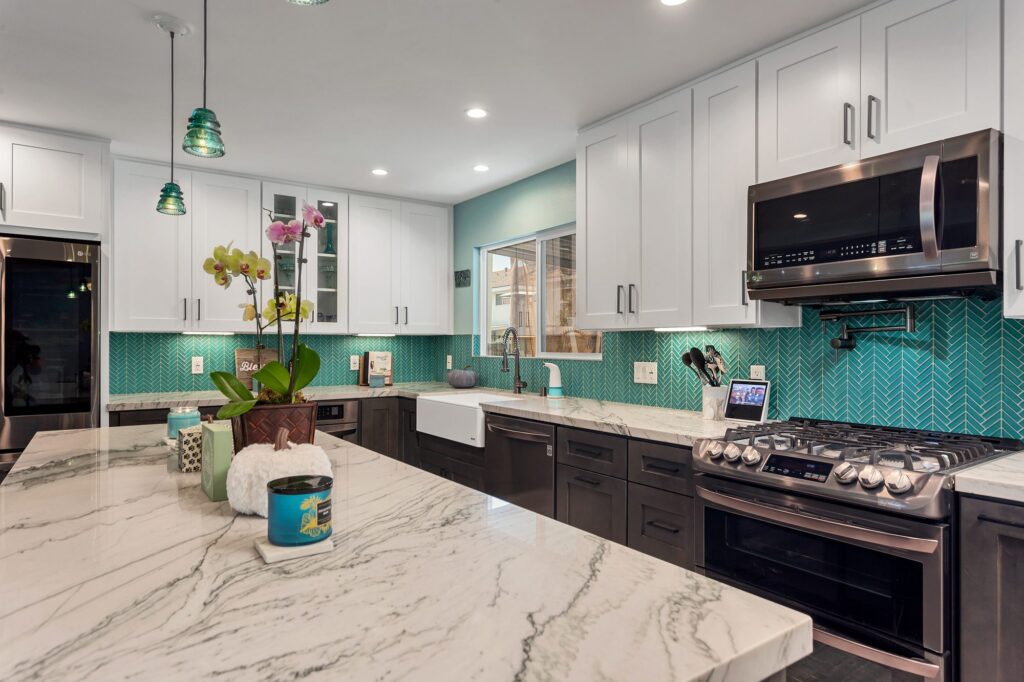
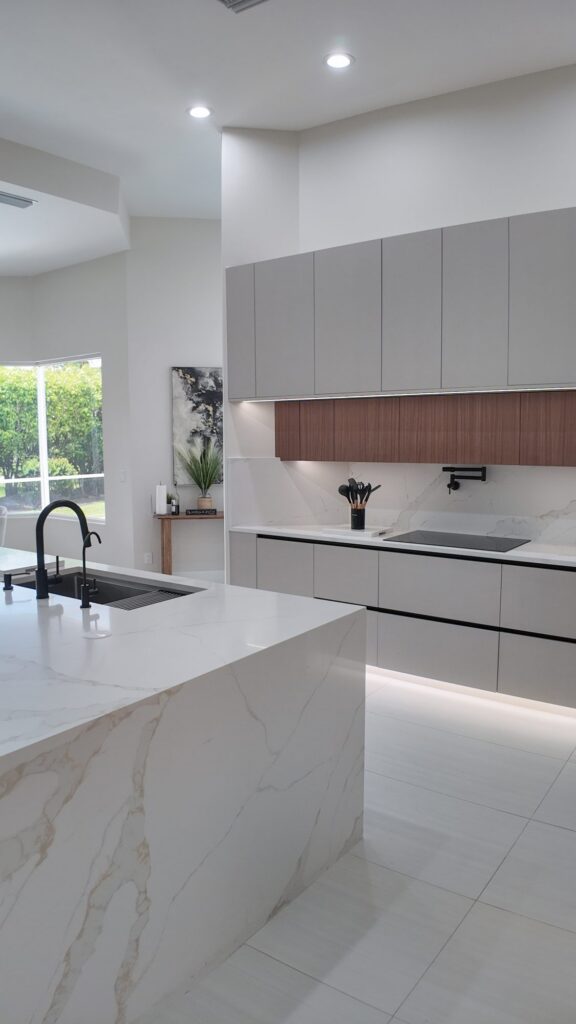
Completed kitchens that show how line items come together. Locations are not published.
From MAV’s video team
Read the transcript
Houston, Texas homeowners. If your kitchen feels outdated, your whole home feels outdated. With MAV Design and Build, we create luxury kitchens designed for real living, entertaining, and everyday function. Get a free 3D design with custom cabinetry planning, optimized workflow, premium finishes, and smart storage solutions. Everything is planned before construction begins. Plus, receive up to $5,000 credit toward your kitchen remodel. Click below to start your kitchen consultation today.
Related kitchen guides
Read the guide →
Read the guide →
Read the guide →
Browse every guide in MAV’s kitchen remodeling guide library.
For current MAV pricing guidance, see kitchen remodel cost in Houston and kitchen remodeling cost by category. For financing options, see remodeling financing in Houston, and for a full scope checklist see what’s included in a kitchen remodel. For how to plan the layout itself before comparing bids, see MAV’s kitchen layout types guide.
For MAV’s full kitchen service, see kitchen remodeling in Houston. Homeowners in Sienna can see MAV’s kitchen remodeling services in Sienna.
- Texas Property Code, Chapter 53 (§53.101 retainage; §53.255 disclosure statement)
- Texas Property Code §41.007 (Home Improvement Contract warning notice)
- Texas Constitution, Article XVI, §50(a)(5) (homestead lien contract requirements)
- 16 CFR Part 429 — FTC Cooling-Off Rule
- Texas Department of Licensing and Regulation — licensing programs (no general-contractor license)
- TDLR — Electrical Safety and Licensing FAQ
- Texas State Board of Plumbing Examiners — License Types
Sources checked October 25, 2026. This page is general information, not legal advice; consult a licensed Texas attorney about a specific contract or dispute.
I'm extremely satisfied with my kitchen renovation. The entire process was handled with professionalism and precision. The crew was respectful, efficient, and always made sure I was informed every step of the way. The final result — a beautiful, well-designed kitchen with top-quality finishes and excellent craftsmanship.
Love their work, the kitchen turned out amazing and exceeded our expectations. Completed in much shorter time than I thought it would. Can't recommend them enough!!
Great experience working with this company! They remodeled my kitchen and did an amazing job. The team was professional, easy to work with, and always on time. Everything went smoothly, and they paid attention to the small details.